Sushi names: what maguro, hamachi, uni and the other toppings mean, family by family
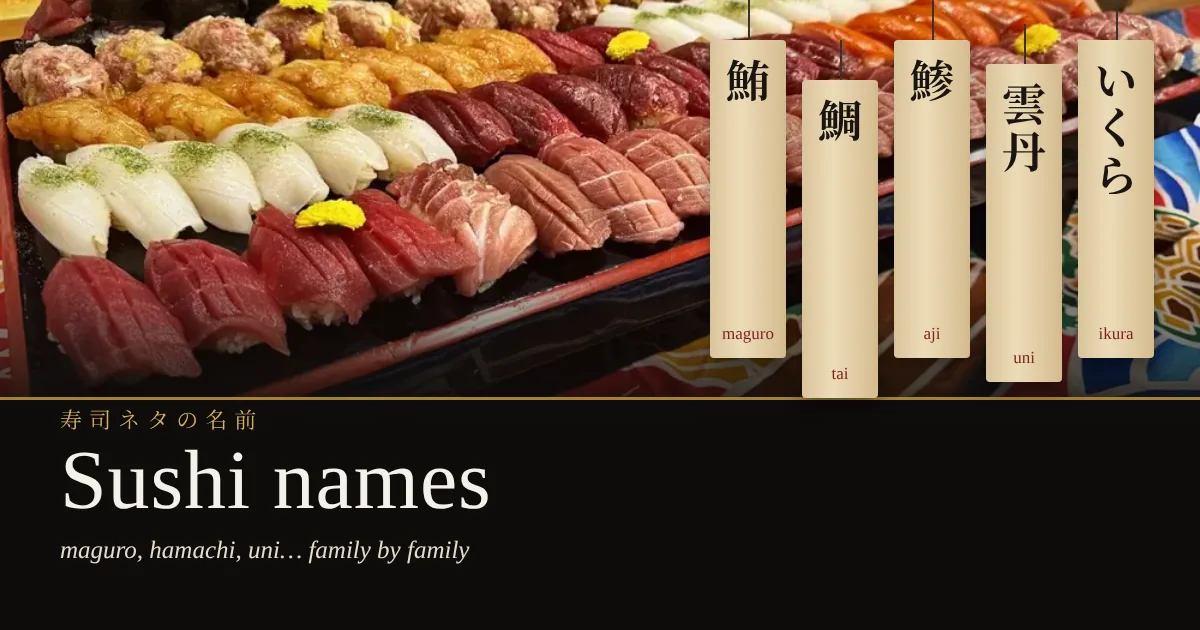
MEGUMI Sushi (東京出張寿司 MEGUMI鮨)
The short answer: most "sushi names" are simply the Japanese names of the topping, called neta. Maguro is tuna, sāmon is salmon, hamachi is young yellowtail, tai is sea bream, ebi is shrimp and uni is sea urchin. Put the name in front of the shape and you have the menu item: maguro nigiri, ikura gunkan, tekka-maki (a tuna roll).
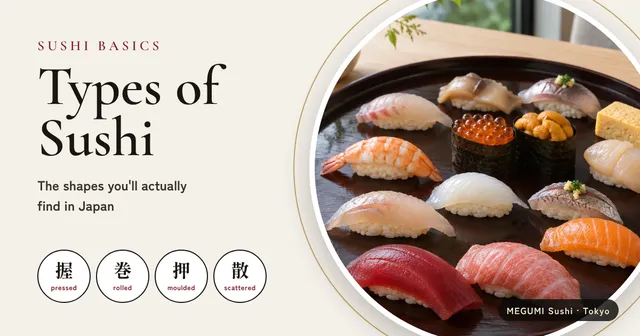
A Japanese sushi menu sorts those names into a few families that every regular knows: red fish, white fish, silver-skinned fish, shellfish, squid and shrimp, roe and urchin, and the cooked pieces. Learn the families first and the long lists online start to make sense. Below is a map, then each family with how to say the names, plus the kanji you'll see on a menu board and the names that change meaning between Japan and menus abroad. (The shapes themselves, like nigiri and gunkan, are covered in types of sushi.)
If you're in Tokyo, our 東京の出張寿司 chef makes these at your own table; more on that at the end.
How to read the lists: each name shows the Japanese, a rough way to say it, and what it is. A bar over a vowel (ō, ū, ā) means hold it a little longer.
Red fish (akami): maguro, toro, salmon and bonito
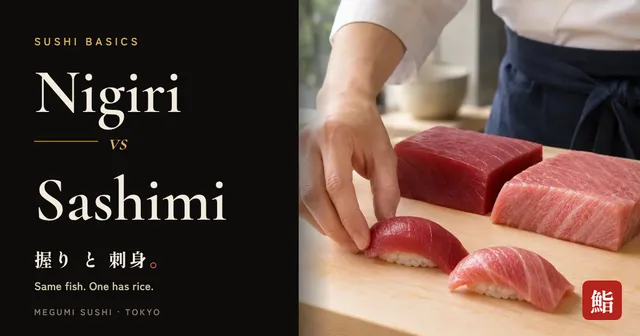
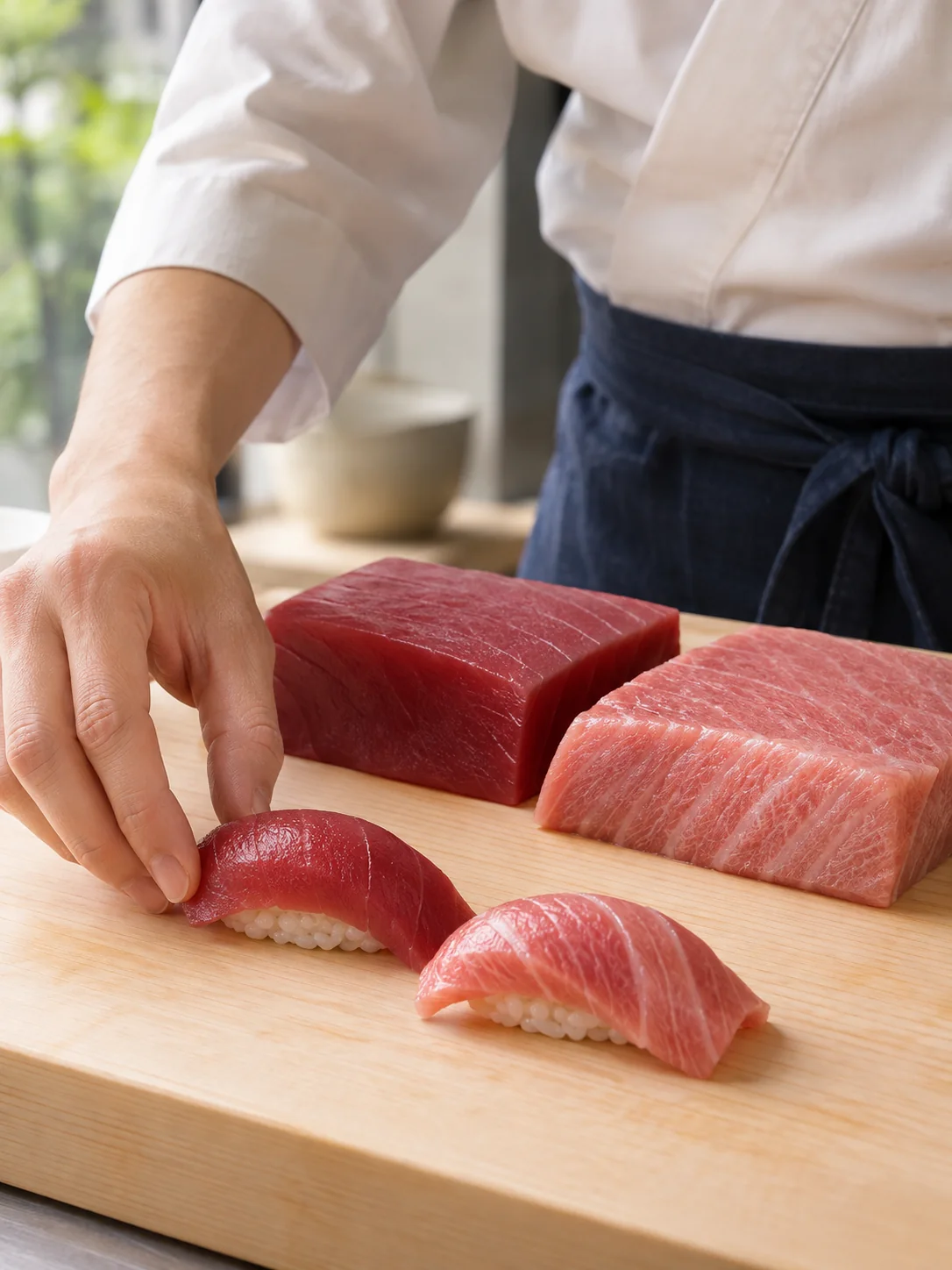
Red-fleshed fish are the heart of Tokyo-style sushi, and tuna above all. When people say "sushi names" they often mean the words for tuna, because one fish gives you several pieces with different names.
- Maguro鮪・まぐろma-GOO-ro
- Tuna. Hon-maguro (本鮪) means bluefin, the most prized kind.
- Akami赤身ah-KAH-mee
- The lean red meat of tuna. Clean, deep flavour; many sushi lovers rate a shop by it.
- Chūtoro中トロCHOO-toh-ro
- Medium-fatty tuna, pink and marbled. Between akami and ōtoro.
- Ōtoro大トロOH-toh-ro
- The fattiest cut, from the belly. Pale and rich; it melts quickly.
- Negitoroねぎとろneh-gee-TOH-ro
- Chopped fatty tuna with scallion, usually served as a gunkan or roll.
- SāmonサーモンSAH-mon
- Salmon for eating raw. The older word sake or shake (鮭) is more often used for cooked salmon.
- Katsuo鰹kah-TSOO-oh
- Skipjack tuna, often called bonito. Frequently served with the skin lightly seared.
White fish (shiromi): tai, hirame and the yellowtails
White fish taste lighter, so a chef's-choice meal often starts here. Yellowtail and amberjack are paler red-tinged fish that many menus place with them.
- Tai / madai鯛・真鯛TIE / MAH-die
- Red sea bream. Often labelled "red snapper" abroad, though it isn't a snapper.
- Hirame鮃hee-RAH-meh
- Flounder (olive flounder). Its chewy fin muscle is a separate piece called engawa.
- Suzuki鱸soo-ZOO-kee
- Japanese sea bass, a summer favourite.
- Hamachi / buriはまち・鰤hah-MAH-chee / BOO-ree
- Japanese yellowtail (amberjack). The name depends on its size; see the ladder below.
- Kanpachi間八kahn-PAH-chee
- Greater amberjack. Firmer and cleaner-tasting than buri.
- Gindara銀鱈geen-DAH-rah
- Black cod (sablefish), rich and soft. Often seared or marinated.
Why does one fish have several names?
Some fish are called shusse-uo (出世魚), "fish that get promoted": they change name as they grow, like a person rising through job titles. Yellowtail is the famous one, and the steps differ between the Tokyo and Osaka areas.
Kantō (Tokyo area)
- Wakashiワカシ
- Inadaイナダ
- Warasaワラサ
- Buriブリ
Kansai (Osaka area)
- Tsubasuツバス
- Hamachiハマチ
- Mejiroメジロ
- Buriブリ
That's why one shop's "hamachi" and another's "buri" can be the same species. Kohada, a silver-skinned fish below, is another shusse-uo: the tiny young fish that appear around summer are sold as shinko.
Silver-skinned fish (hikarimono): aji, saba and kohada
Hikarimono means "shiny things," after the silver skin left on the slice. Most are cured with salt and vinegar before they reach the rice, which tames their strong flavour. They're the pieces regulars often order to judge a chef's work.
- Aji鯵AH-jee
- Horse mackerel (jack mackerel). Often served raw with grated ginger and scallion.
- Saba鯖SAH-bah
- Mackerel, usually as shime-saba, cured in salt and vinegar.
- Iwashi鰯ee-WAH-shee
- Sardine. Soft and oily; best very fresh.
- Kohada小鰭koh-HAH-dah
- Gizzard shad, cured in vinegar. A classic of Tokyo-style sushi.
- Sanma秋刀魚SAHN-mah
- Pacific saury, an autumn fish. The kanji literally read "autumn sword fish."
Shellfish (kai): hotate, akagai and friends
Shellfish names usually end in -gai or -kai, from 貝 (shell). They're prized for texture: crunchy, springy or sweet.
- Hotate帆立hoh-TAH-teh
- Scallop. Soft and sweet, a good first shellfish.
- Akagai赤貝ah-KAH-guy
- Ark shell (blood clam), bright red-orange, crunchy, with a sea aroma.
- Torigai鳥貝toh-REE-guy
- Japanese cockle, with a dark, curved foot. A spring treat.
- Hokkigai北寄貝HOHK-kee-guy
- Surf clam, often briefly blanched, which turns the tip pink.
- Tsubugaiつぶ貝TSOO-boo-guy
- Whelk. Very crunchy.
- Awabi鮑ah-WAH-bee
- Abalone, served raw and crisp or simmered until tender.
Shrimp, squid and octopus: ebi, ika and tako
- Ebi海老EH-bee
- Shrimp or prawn. On nigiri it's usually boiled (often kuruma-ebi, Japanese tiger prawn).
- Amaebi甘海老ah-MAH-eh-bee
- "Sweet shrimp," served raw. Sometimes the fried heads come afterwards.
- Botan-ebi牡丹海老boh-TAHN-eh-bee
- A larger, very sweet shrimp, also raw.
- Ika烏賊・いかEE-kah
- Squid, often scored finely so it's tender. Kinds include aori-ika (bigfin reef squid) and sumi-ika (cuttlefish).
- Tako蛸・たこTAH-koh
- Octopus, usually boiled or simmered. Chewy and mild.
Roe and sea urchin: ikura, uni and tobiko
Soft toppings like these would slide off rice, so they're usually served as gunkan, with a strip of nori holding them in.
- Ikuraイクラee-KOO-rah
- Salmon roe: large orange pearls that pop, usually marinated in soy sauce or salt.
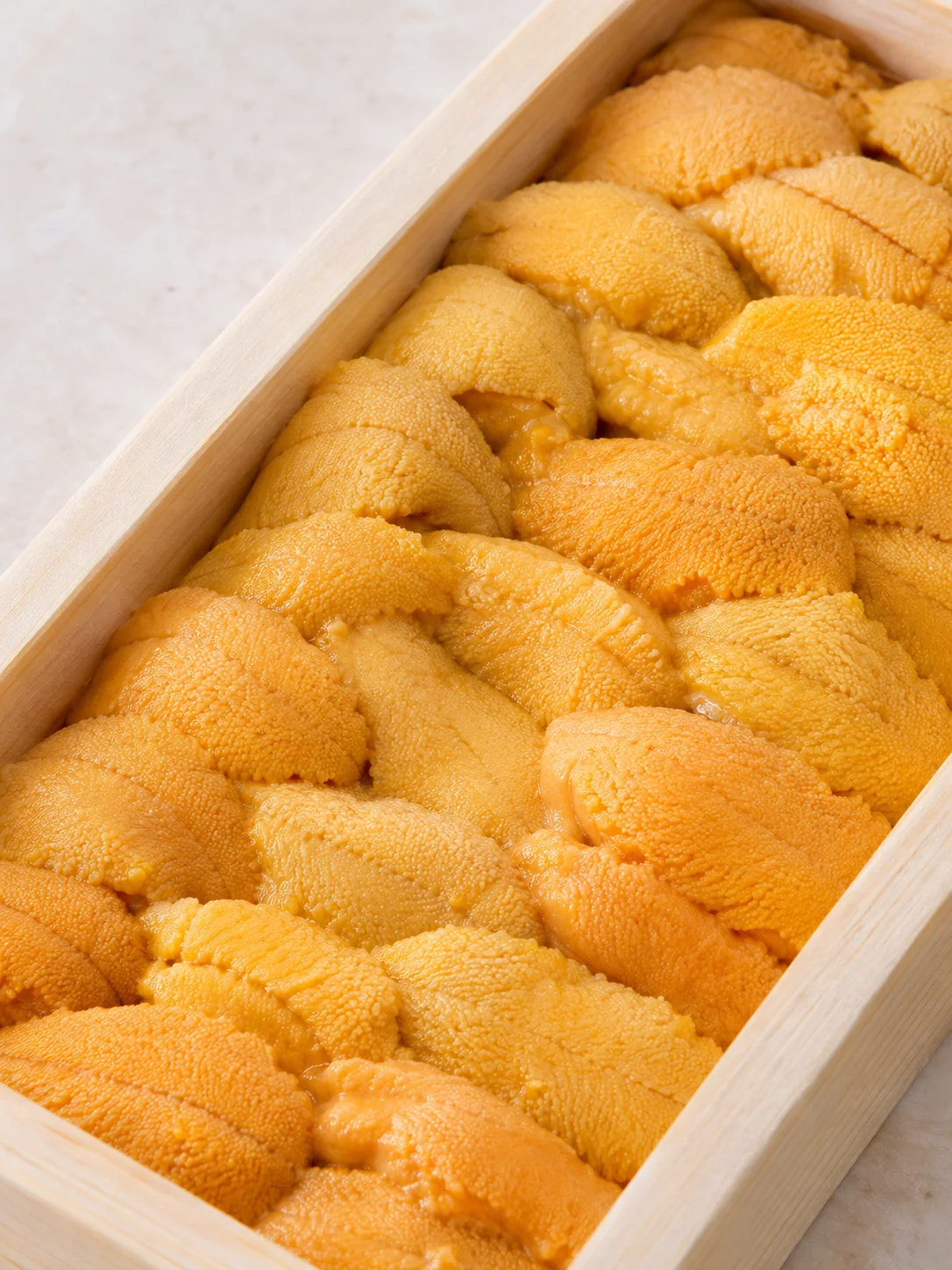
- Uni雲丹・うにOO-nee
- Sea urchin. The soft golden part is the roe-producing organ. Sweet, briny and creamy.
- Tobikoとびこtoh-BEE-koh
- Flying fish roe: tiny, crunchy and often brightly coloured.
- Kazunoko数の子kah-ZOO-noh-koh
- Herring roe in firm, crunchy pieces, closely tied to New Year food.
Cooked pieces: anago, unagi and tamago
Not all sushi is raw. These are cooked, and they're good picks if raw fish isn't for you.
- Anago穴子ah-NAH-goh
- Conger eel, a saltwater eel. Simmered until soft and brushed with a sweet glaze called tsume.
- Unagi鰻oo-NAH-gee
- Freshwater eel, grilled with a sweet soy sauce. Richer than anago. Unatama pairs it with egg.
- Tamago玉子tah-MAH-goh
- Sweet, layered omelette. Some people like to try it to see a shop's style.
Food allergies and raw fish: if you have an allergy (shellfish and fish roe are common ones), are pregnant, or have any health concern about raw seafood, check with your doctor and tell the restaurant or chef in advance. Cooked toppings can still be seasoned with fish stock or soy sauce.
Can you read the fish names on a Japanese menu?
Many fish are written with a kanji that has the "fish" part 魚 on the left. Spot that part and you know it's a fish; the right side tells you which. Plenty of shops write names in kana instead (まぐろ, サーモン), but these are the ones you'll see on wooden boards and noren.
- 鮪magurotuna
- 鯛taisea bream
- 鮃hirameflounder
- 鰤buriyellowtail
- 鯵ajihorse mackerel
- 鯖sabamackerel
- 鰯iwashisardine
- 鮭sakesalmon
- 鰹katsuoskipjack
- 鰻unagifreshwater eel
- 鮑awabiabalone
- 鮨sushione way to write it
Which sushi names mean something different abroad?
Menus outside Japan sometimes translate names loosely. A few to know before you compare:
"Red snapper"
In Japan this is usually tai, red sea bream, a different fish.
"White tuna"
Abroad it can mean albacore, or sometimes escolar, which isn't tuna. In Japan, albacore is binnaga or bintoro.
"Yellowtail"
On sushi menus this is hamachi/buri, Japanese amberjack, not the yellowtail snapper.
"Eel"
Check which: unagi (freshwater, grilled, rich) or anago (saltwater, simmered, lighter).
"Spicy tuna"
A roll style from abroad. Traditional counters in Japan rarely serve it; ask for negitoro if you want chopped tuna.
How do you order by name in Japanese?
Say the name, then お願いします (onegai shimasu, "please"). Japanese syllables get roughly even weight, so don't push hard on one; the capitals in the lists above just show where English speakers tend to land.
- 中トロ、お願いします。Chūtoro, onegai shimasu.Medium-fatty tuna, please.
- 今日のおすすめは?Kyō no osusume wa?What do you recommend today?
- わさび抜きで。Wasabi-nuki de.Without wasabi.
- これは何ですか?Kore wa nan desu ka?What is this?
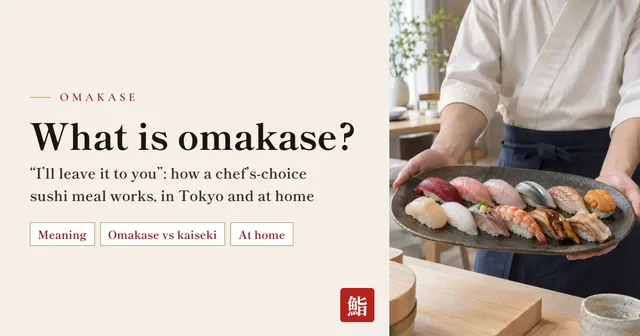
At an omakase meal you won't need to order at all, but the chef will often say the name as each piece is served. Knowing the families above helps you follow along. See what is omakase and sushi etiquette in Japan for the rest.
Hear the names at your own table in Tokyo
At MEGUMI Sushi, our chef comes to your home, rental apartment or office in Tokyo's 23 wards and makes sushi one piece at a time in front of you, so you can ask what each one is. The toppings change with the market; examples include akami and chūtoro, madai, ebi, seared salmon, tsubugai, iwashi or aji and ikura, with torigai and uni as possible upgrades.
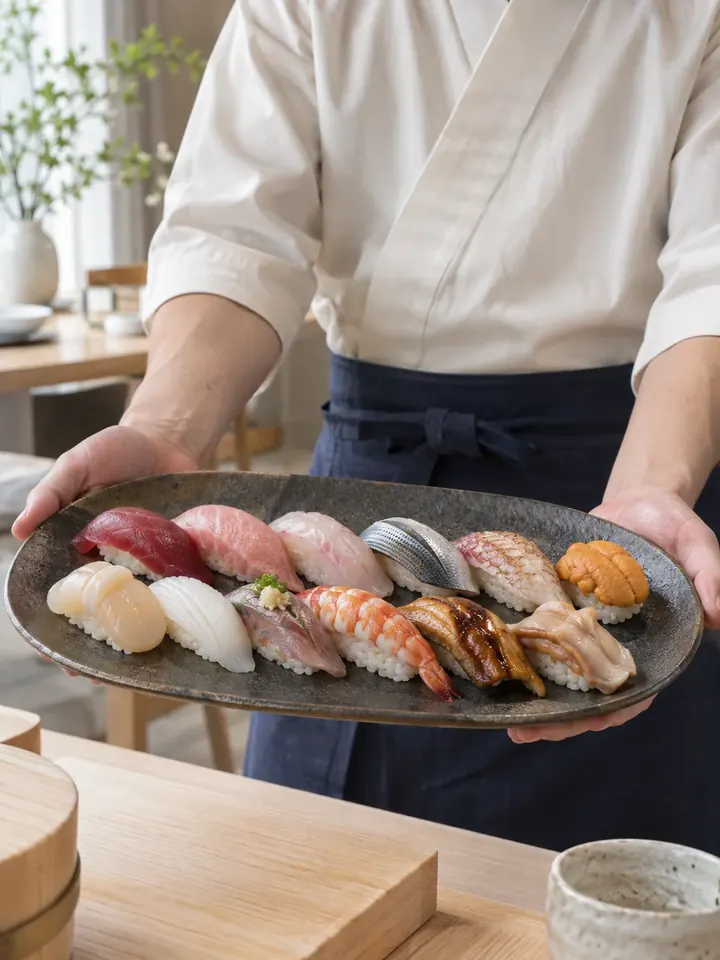
- What each guest gets: 10 chef's-choice pieces plus ara-jiru (fish-bone soup) or akadashi (red miso soup). Examples are on our English page and the menu page (Japanese).
- Price for visitors from overseas: $100 per guest, all included (chef's visit, ingredients and transport within the 23 wards), paid in cash in Japanese yen on the day. Details are on the price page (Japanese).
- Time: about 1.5 hours from arrival to clean-up. You provide a table, running water and drinks such as tea.
- Dietary needs: tell us before booking, and we'll tell you whether we can adjust.
To ask, send the date, number of guests and area on LINE; asking doesn't confirm a booking. You can also pick a slot on the booking calendar (Japanese) and write "Overseas guest" in the ご要望 (requests) box.
Every piece named, at your table in Tokyo
MEGUMI Sushi's chef comes to your place and makes each piece in front of you.
- $100 per guest, all included
- Each guest: 10 chef's-choice pieces + soup
- From 1 guest, Tokyo 23 wards
- Pay in cash, in Japanese yen, on the day