Sushi etiquette in Japan: how to eat sushi properly, and what isn't actually rude
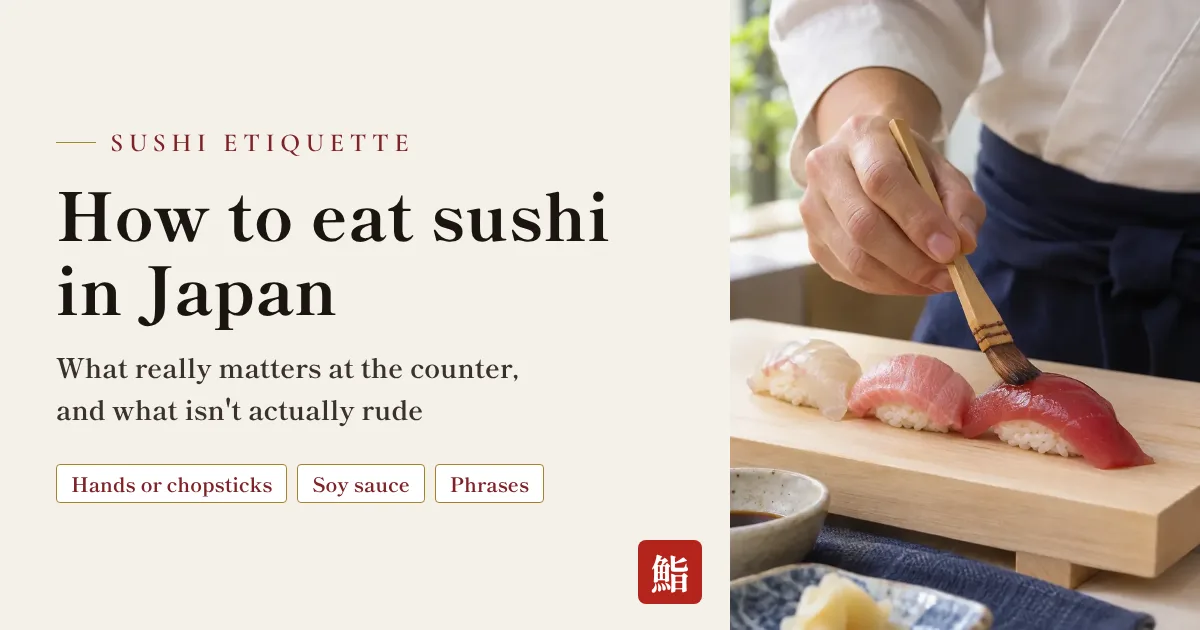
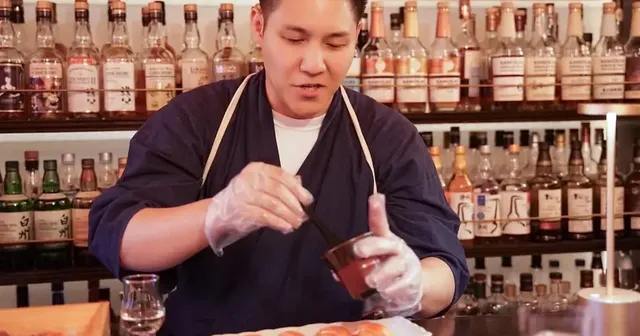
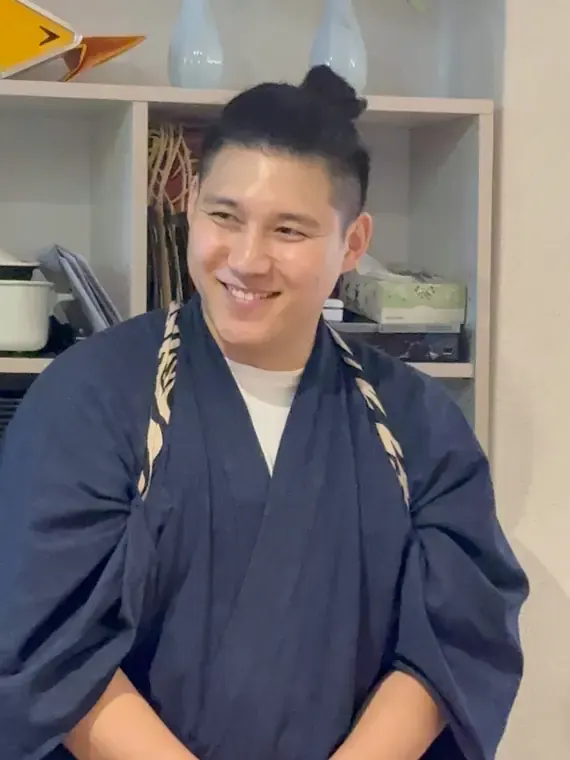
MEGUMI Sushi (東京出張寿司 MEGUMI鮨)
Key points
- Eat each piece soon after it's served. This matters more than any other rule.
- Hands or chopsticks are both fine for nigiri. If you use soy sauce, touch the fish side to it, not the rice.
- If the chef has already brushed on soy (nikiri), salt or citrus, eat the piece as it is.
- The habits that are actually frowned on in Japan are mostly about chopsticks: passing food from chopsticks to chopsticks, and standing them upright in rice.
- Asking for no wasabi, taking two bites, or saying you don't eat something is not rude. Just say so.
The short answer: sushi etiquette in Japan comes down to one idea: the chef has made each piece to be eaten now, in the state it was served. Eat it soon, don't drown it in soy sauce, and keep the piece together. Everything else is detail, and most chefs are far more relaxed about visitors than online lists suggest.
This guide is written for travelers and business visitors to Japan. It explains the rules that matter at a sushi counter, the chopstick habits Japanese people really do notice, and the "rules" you can safely ignore. It ends with what changes when a sushi chef comes to your own table, which is what we do at 東京の出張寿司 MEGUMI鮨 (MEGUMI Sushi, a private sushi chef service in Tokyo).
What are the basic rules of sushi etiquette?
If you only remember one section, make it this one. These five habits cover almost every situation, from a conveyor-belt shop to an omakase counter.
1. Eat it soon after it's served
- Why
- Nigiri is best when the rice is still loose and close to body temperature, and the fish hasn't warmed up or dried out. A few minutes of waiting changes the piece.
2. Check before you add soy sauce
- Why
- Many counters brush each piece with nikiri (a thin, sweetened soy glaze) or finish it with salt or citrus. Those pieces are already seasoned.
3. Soy sauce on the fish, not the rice
- Why
- Rice soaks up soy sauce fast, gets too salty and can fall apart in the dish.
4. Keep the piece together
- Why
- Don't peel the fish off the rice or eat the parts separately. The balance between the two is the point of nigiri.
5. Tell the chef what you can't eat, early
- Why
- At an omakase counter the chef plans the sequence. Mentioning allergies or foods you avoid before the meal is much easier for everyone than leaving pieces on the plate.
How do you eat a piece of nigiri, step by step?
- 1
Wipe your hands.
Most restaurants give you a wet towel (oshibori). Use it for your hands, not your face, and fold it back neatly. It's also what you use if you plan to eat with your fingers.
- 2
Look before you dip.
If the piece is glossy from nikiri, or the chef says it's ready, skip the soy sauce.
- 3
Turn it on its side.
With fingers or chopsticks, tip the piece so the fish faces down, then touch just the edge of the fish to the soy sauce.
- 4
Fish side on your tongue.
Put it in your mouth fish-side down so you taste the fish first.
- 5
One bite if you can.
Nigiri is sized for one bite. If it's too big, two bites is fine. Try not to put a half-eaten piece back on the plate.
- 6
Reset with ginger or tea.
A slice of gari (pickled ginger) or a sip of green tea clears your palate before the next piece.
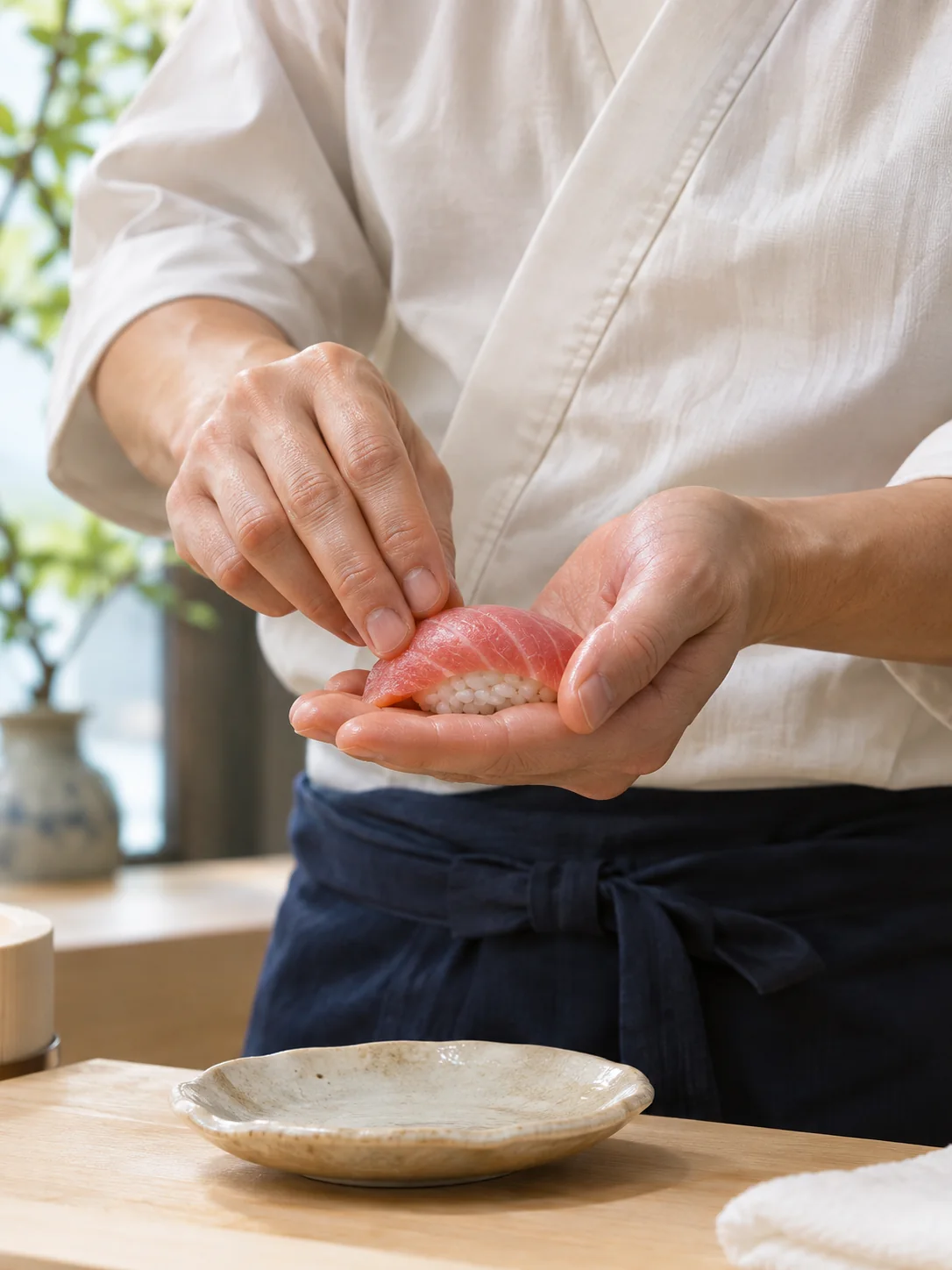
Should you use your hands or chopsticks?
Both are correct for nigiri. Eating nigiri with your fingers is a long-standing way to eat it in Japan, and many regulars still do. Use whichever lets you pick up the piece without squeezing it or dropping it in the soy sauce.
- Nigiri: hands or chopsticks.
- Sashimi (sliced fish without rice): chopsticks.
- Gari (pickled ginger): chopsticks. It's a palate cleanser, not a topping, so eat it between pieces rather than on top of them.
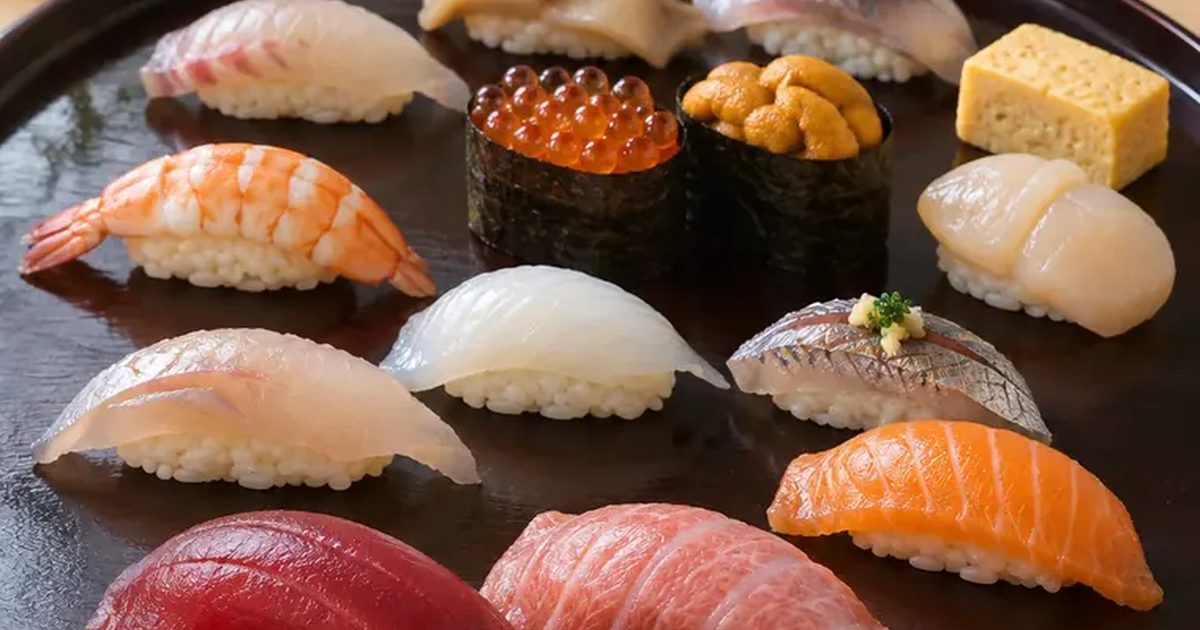
- Rolls and gunkan (seaweed-wrapped pieces topped with roe or uni): either. Rolls tend to be easier with fingers.
If you aren't comfortable with chopsticks, using your hands is often the more natural choice, not a compromise.
How much soy sauce and wasabi should you use?
Pour only a little soy sauce into the small dish. You can always add more, and a full dish left over looks wasteful.
- Wasabi is usually already inside. At many counters, the chef puts a small amount of wasabi between the fish and the rice, adjusted for each fish.
- Mixing wasabi into soy sauce. At a casual shop no one will mind. At a counter, putting a little wasabi directly on the fish keeps both flavors clearer. Treat this as a tip, not a rule.
- Don't want wasabi? Ask for sabi-nuki (no wasabi) before the chef starts. It's a common request, including for children.
- Gunkan pieces: the topping can fall off if you tip them over. Use a slice of gari as a small brush to dab soy sauce on top, or eat it as it is.
Is there a right order to eat sushi in?
With omakase (chef's choice), the chef decides the order, so you simply eat what is in front of you. When you order for yourself, a common approach is to go from light to rich:
Start
- Light flavors
- White fish such as sea bream, squid
Middle
- Fuller flavors
- Lean tuna (akami), shellfish, shrimp, silver-skinned fish such as horse mackerel or sardine
Later
- Rich or seared pieces
- Fatty tuna, salmon, seared pieces, sea urchin (uni), salmon roe (ikura)
Finish
- Rolls, soup
- A roll, and miso soup or a fish-bone soup
This isn't a law. If you love tuna, order tuna first. The order just helps delicate flavors not get lost after rich ones. If you read Japanese, our blog has a longer guide to the order to eat sushi.
Which chopstick habits are considered rude in Japan?
These are the ones that Japanese diners really notice, because some of them are associated with funerals. They apply at every Japanese meal, not only sushi.
Passing food chopsticks to chopsticks
Handing a piece from your chopsticks to someone else's echoes a funeral rite. Put it on their plate instead.
Standing chopsticks in rice
Chopsticks stuck upright in a bowl of rice resemble an offering for the dead. Lay them down.
Pointing or waving them
Don't point at people or dishes with your chopsticks, or gesture with them while talking.
Hovering over dishes
Decide what you want before reaching, rather than moving your chopsticks back and forth over shared plates.
Rubbing disposable chopsticks
Scraping wooden chopsticks together can suggest they're cheap. Usually there's no need.
Taking from shared plates
If serving chopsticks are provided, use them. If not, ask what the table prefers.
When you aren't using them, rest your chopsticks on the holder (hashioki) or across the edge of your plate.
What about photos, phones, perfume and dress at a sushi counter?
- Photos: at high-end counters, ask first. Take the photo quickly, without flash, and then eat. Some counters don't allow photos at all.
- Phones: keep them off the counter and on silent. Long calls are best taken outside.
- Perfume: strong fragrance competes with the smell of the fish and affects people sitting next to you. Go light or skip it.
- Watches and bracelets: some guides suggest removing them so they don't scratch a wooden counter. It's a thoughtful touch at expensive places.
- Dress: smart casual is fine at most counters. Very casual beachwear can feel out of place at high-end restaurants.
- Timing: omakase counters often start everyone at the same time. Arrive on time, and call if you'll be late.
Which "rules" can you safely ignore?
Lists of sushi etiquette online can make it sound like a test. In practice, these are fine:
"You must eat with chopsticks."
- Reality
- Hands are a traditional way to eat nigiri.
"Asking for no wasabi insults the chef."
- Reality
- Sabi-nuki is a normal request. Just ask before the chef makes the piece.
"Two bites is wrong."
- Reality
- One bite is ideal, but if the piece is big for you, two bites is better than struggling. You can also ask for smaller pieces or less rice.
"You can't say you don't like something."
- Reality
- Chefs would rather know. Mention it early, especially allergies.
"Don't talk to the chef."
- Reality
- At a counter, asking "What fish is this?" or saying it was delicious is part of the meal. Just don't distract the chef at a busy moment.
Do you tip at sushi restaurants in Japan?
Tipping isn't a general custom in Japan, and at most restaurants you simply pay the bill. Some places add a service charge, which will appear on the bill. A sincere "Gochisōsama deshita" (thank you for the meal) to the chef on your way out is the usual way to show appreciation.
For MEGUMI Sushi, the price is a chef fee plus ingredients, with transport extra. The total including ingredients and transport is confirmed with you as a quote, and payment is by bank transfer by the day before the event.
Which Japanese phrases help at a sushi counter?
Itadakimasu
- When
- Before you start eating. Roughly "I gratefully receive."
Oishii!
- When
- "Delicious!" Any chef is happy to hear it.
Kore wa nan desu ka?
- When
- "What is this?" Useful when a new fish arrives.
Sabi-nuki de onegaishimasu
- When
- "No wasabi, please." Say it before the chef starts.
◯◯ ga taberaremasen
- When
- "I can't eat ◯◯." Fill in the food, for example kai (shellfish) or ebi (shrimp). For an allergy, say arerugī (allergy) as well.
Gochisōsama deshita
- When
- At the end of the meal. "Thank you for the meal."
You may hear chefs use counter slang such as agari (tea) or murasaki (soy sauce). These are words for staff. Guests saying ocha (tea) and shōyu (soy sauce) is perfectly natural.
Does sushi etiquette change when a chef comes to your home?
The core is the same: the chef hands you each piece as it's made, so eat it while it's fresh. But a private chef at your own table is more relaxed than a famous counter, which is why many families and groups choose it.
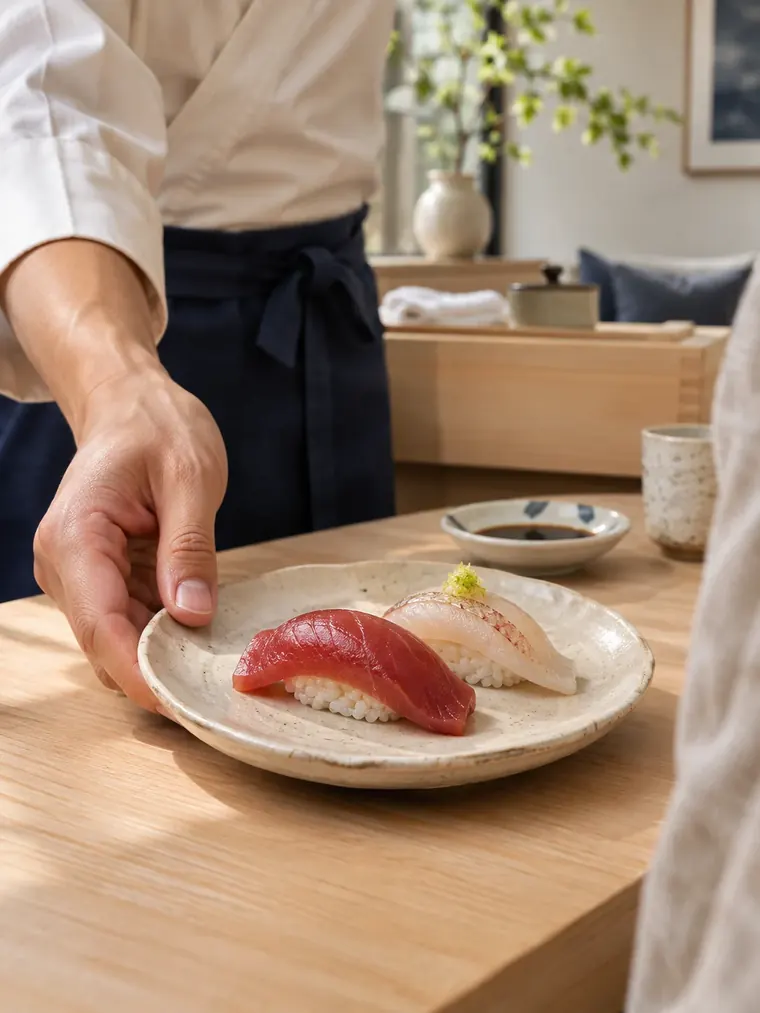
- Talk as much as you like. There are no neighbors to worry about, so ask the chef about each fish.
- Kids can join. With MEGUMI Sushi, tell us how many children and their ages when you first get in touch.
- Dietary needs go in before booking. Tell us about allergies, foods someone doesn't eat, or vegan, vegetarian or religious diets before booking. We'll check the details and tell you whether we can adjust. Please don't wait until the day.
- What you set out. A table, running water, and drinks such as tea. The chef brings chopsticks, small and serving plates, soy sauce, wasabi and gari.
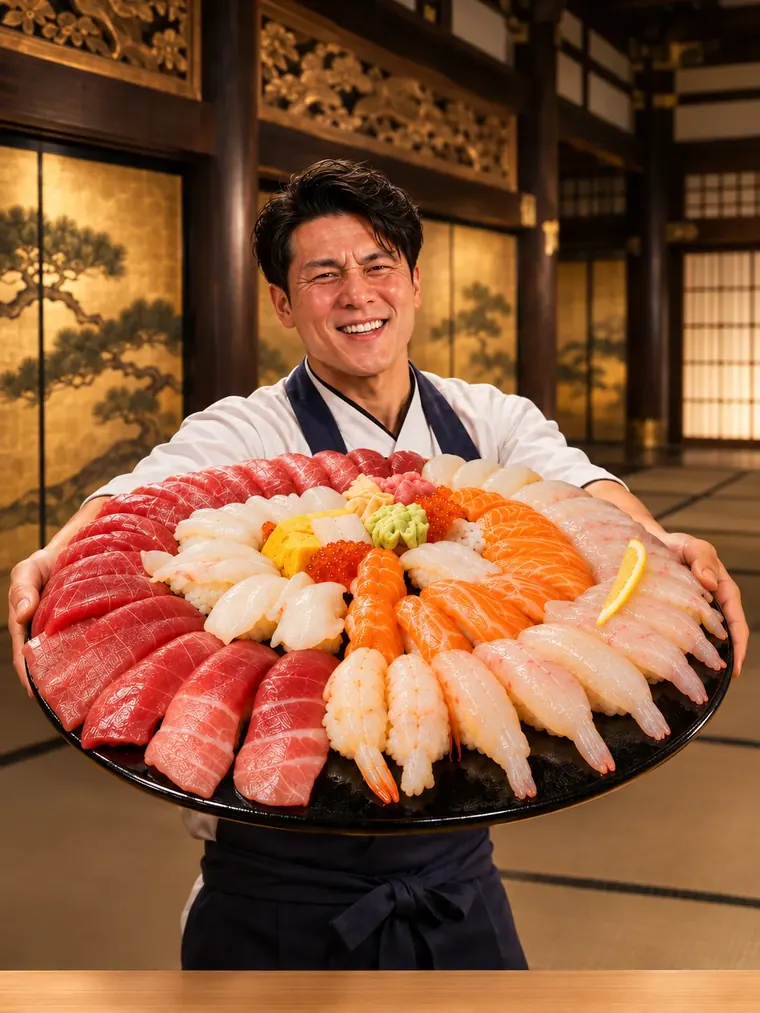
- How it's served. Small groups are served one piece at a time. For larger groups, the chef fills platters as they work.
- How long. About 1.5 hours from the chef's arrival to clean-up, and the chef does the clean-up.
Planning one? Our guide to having a sushi chef come to your home, rental or office in Tokyo covers booking from abroad, checking with your hotel or rental, and start times. Prices and booking are on the MEGUMI Sushi English page, and the original Japanese details are on our 東京の出張寿司 page.
A sushi chef, at your place in Tokyo
MEGUMI Sushi's chef comes to you and makes sushi in front of you.
- Chef fee ¥22,000 (incl. tax) + ingredients; transport extra
- 1–9 guests: 10 chef's-choice pieces + soup
- 10+ guests: per-chef fee, total by quote
- Please provide a table, running water and drinks. Tokyo 23 wards (ask about other areas)