Sushi experience in Tokyo: how to have a sushi chef come to your home, rental or office
MEGUMI Sushi (東京出張寿司 MEGUMI鮨)
Key points
- Tokyo's sushi experiences fall into four types: counter restaurants, casual sushi shops, sushi-making classes, and a private chef who comes to you.
- A private chef works best for families, groups that are hard to seat together, and anyone who would rather stay put after a long day.
- Before you book, settle five things: guests, place, permission from the venue, start time and dietary needs.
- At MEGUMI Sushi, 1–9 guests pay a ¥22,000 chef fee (incl. tax) + ingredients + transport. It takes about 1.5 hours, and you provide a table, running water and drinks; the chef brings chopsticks, plates and condiments.
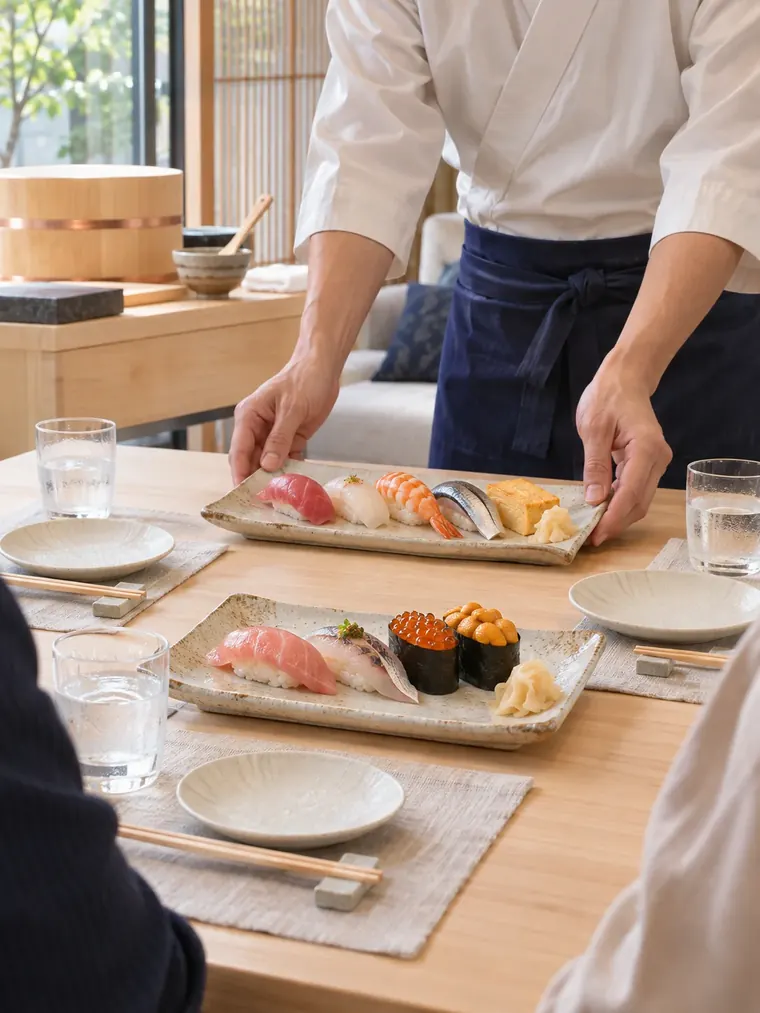
The short answer: if you want a real sushi counter in Tokyo but don't want to fight for a reservation, drag tired kids across the city, or split a group across two tables, you can have a sushi chef come to where you are. The chef sets up at your table, makes each piece in front of you, and hands it over while it's still at its best.
This guide is for travelers and business visitors. It compares the main ways to eat sushi in Tokyo, lists what you need to settle before booking a private chef, and explains how to enjoy the meal once the chef starts. Where we mention prices and rules, they come from our own Japanese pages for 東京の出張寿司 MEGUMI鮨 (MEGUMI Sushi, a Tokyo private sushi chef service).
What kinds of sushi experiences are there in Tokyo?
Most options fall into four groups. They suit different trips, so pick by what you want from the evening, not by price alone.
Counter restaurant (omakase)
- What it is
- You sit at the counter and the chef serves a sequence of pieces chosen for the day.
- Good to know
- Popular counters are small and can be hard to book. Seating, timing and group size follow the restaurant's rules.
Casual sushi shops
- What it is
- Conveyor-belt, standing or neighborhood shops where you order piece by piece.
- Good to know
- Easy to drop in and great for a quick meal, but less of an "event."
Sushi-making class
- What it is
- An instructor shows you how to make sushi, and you make your own.
- Good to know
- Fun and hands-on, but you eat what you make rather than a chef's nigiri.
A private chef who comes to you
- What it is
- A sushi chef visits your home, rental apartment, office or party venue and makes sushi at your table.
- Good to know
- The venue is yours, so you choose who comes and how long you stay. You need to check that the place allows an outside chef.
When does a private chef make the most sense?
Traveling with kids
No worrying about noise in a quiet restaurant, and bedtime is just down the hall.
Groups
Family reunions or friends traveling together can sit around one table instead of a long counter.
After a long day
After sightseeing or a long flight, you can stay where you are.
Hosting for business
Hold the meal in your Tokyo office after a meeting, without moving everyone to a restaurant.
A celebration
Birthdays, anniversaries or a farewell night on the last evening of your trip.
Watching the craft
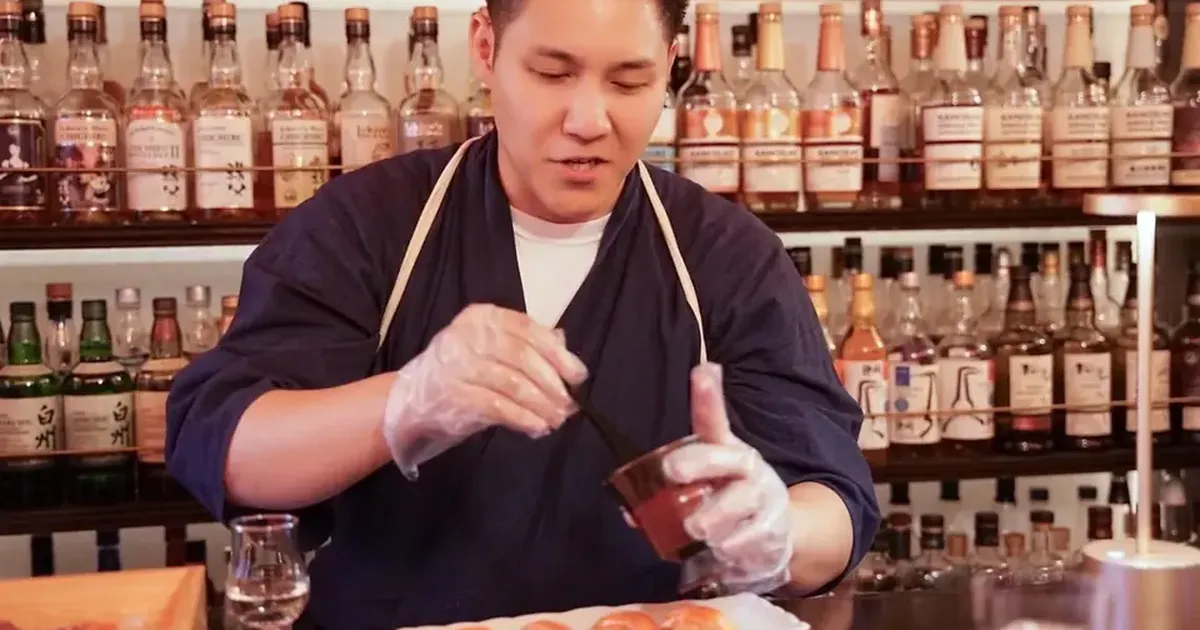
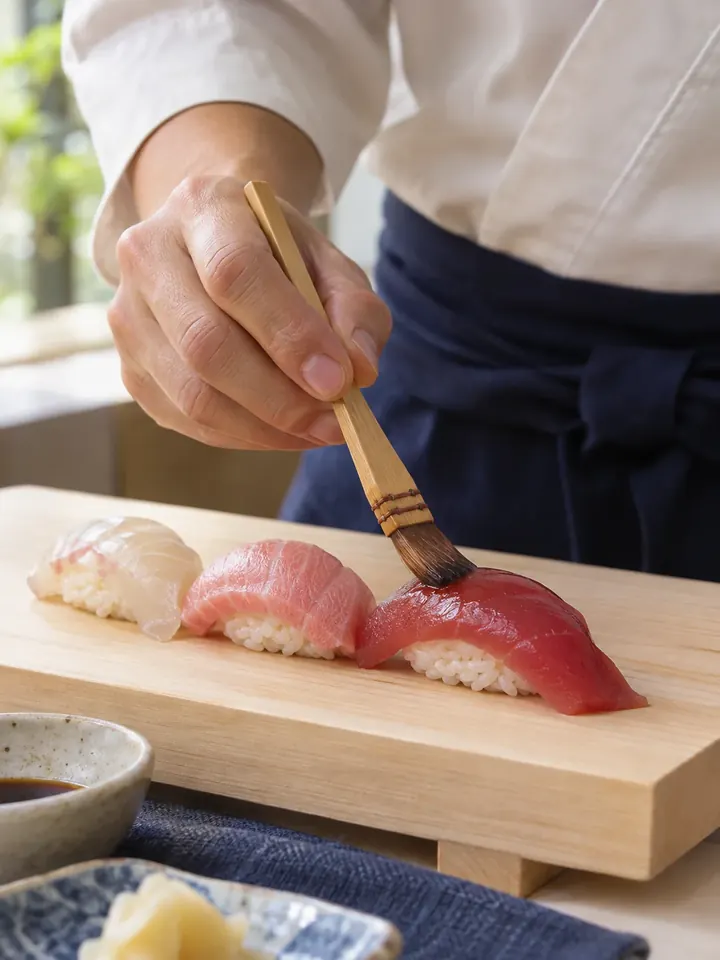
See the chef shape the rice, sear the fish and brush on nikiri soy up close.
For business groups in Tokyo, our Japanese page for corporate events covers office meals, and the page for party hosts covers larger gatherings where the chef fills platters.
What should you decide before booking?
Have these ready when you first send a message. Rough answers are fine. You can confirm the details later.
- Number of guests. At MEGUMI Sushi, 1–9 guests is the small-group plan; 10 or more is priced per chef with a quote.
- Place and ward. The service covers Tokyo's 23 wards (for example Minato, Shibuya, Shinjuku, Chuo). Elsewhere, ask first.
- Permission. If it isn't your own home, confirm the venue allows an outside chef to prepare and serve food (see the next section).
- A table, running water and drinks. These are what you prepare. Any other equipment depends on the venue and is confirmed during the consultation.
- Start time. The booking calendar offers weekday starts from 19:30 to 21:30, and weekend and holiday starts between 12:00 and 19:00.
- Dietary needs. Allergies, foods someone doesn't eat, vegan, vegetarian or religious diets. Tell us before booking, and we'll tell you whether we can adjust.
- Children. Mention how many children and their ages.
- What the chef brings. Chopsticks, small and serving plates, soy sauce, wasabi and gari (pickled ginger). You only need to have drinks such as tea ready.
Can the chef come to a hotel or vacation rental?
Sometimes. It depends on the property, not on the chef. Hotels, rented event spaces and shared rooms in apartment buildings each have their own rules about outside food and outside cooks. Before booking, ask the hotel, the venue, or your rental host something like: "May a sushi chef come in to prepare and serve food for our group?" A written yes is easiest for everyone.
Also check the practical side: a table big enough for your group, a sink nearby, how the chef gets in (building entry, elevator, parking), and any quiet hours.
How much does a private sushi chef cost?
Pricing varies by service. Some charge per person for a course; others charge a chef fee plus ingredients. When comparing, line up the total including tax, transport and extras. Here is how MEGUMI Sushi prices it, taken from our Japanese pages:
1–9 guests
- Chef fee
- ¥22,000 (incl. tax) + ingredients
- Menu
- 10 chef's-choice pieces + a soup: ara-jiru (made from fish bones and trimmings) or akadashi (red miso soup)
10+ guests
- Chef fee
- ¥22,000 (incl. tax) per chef + ingredients
- Total
- By quote. Groups of 100+ can be discussed.
- Transport is extra, based on the train or taxi fare from Toritsu-daigaku Station.
- Extra nigiri and some drinks are available for an additional charge, and are explained in advance.
- Flowers, gifts and decorations are not included.
Because the chef fee is fixed for a small group, the cost per person goes down as you add guests up to nine. Ingredients depend on the market and your budget, so ask for the full total before you decide.
How do you book from abroad?
There are two ways, and both are in Japanese.
Ask on LINE first
- Steps
- Install LINE, add our official account, and send your date, guests, ward and occasion.
- Booking
- Asking does not confirm anything. You book after checking the quote.
Book a slot on the calendar
- Steps
- Choose an open time on the booking calendar, then enter name, phone, email, guests and ward.
- Booking
- Submitting confirms it immediately. The total including ingredients and transport is sent afterwards.
Language: our pages don't promise English support, so write a short, clear message and ask about language for the day. Translation apps work well for short questions. A message like this is enough:
"Hello. We are a family of 4 visiting Tokyo. Could you come to our rental apartment in Minato-ku on [date] at 19:30? One child is 6. One adult does not eat shellfish. The host has said an outside chef is OK."
Payment: by bank transfer, due by the day before your event. If you only have an overseas bank account, raise this in your very first message. International transfers can take a few days and carry fees, so leave enough time.
Changes and cancellation: the terms are explained before you book. Read them before you confirm, especially if your travel dates might move.
What happens on the day?
Arrival and set-up
The chef arrives and sets up at your table.
Nigiri, one by one
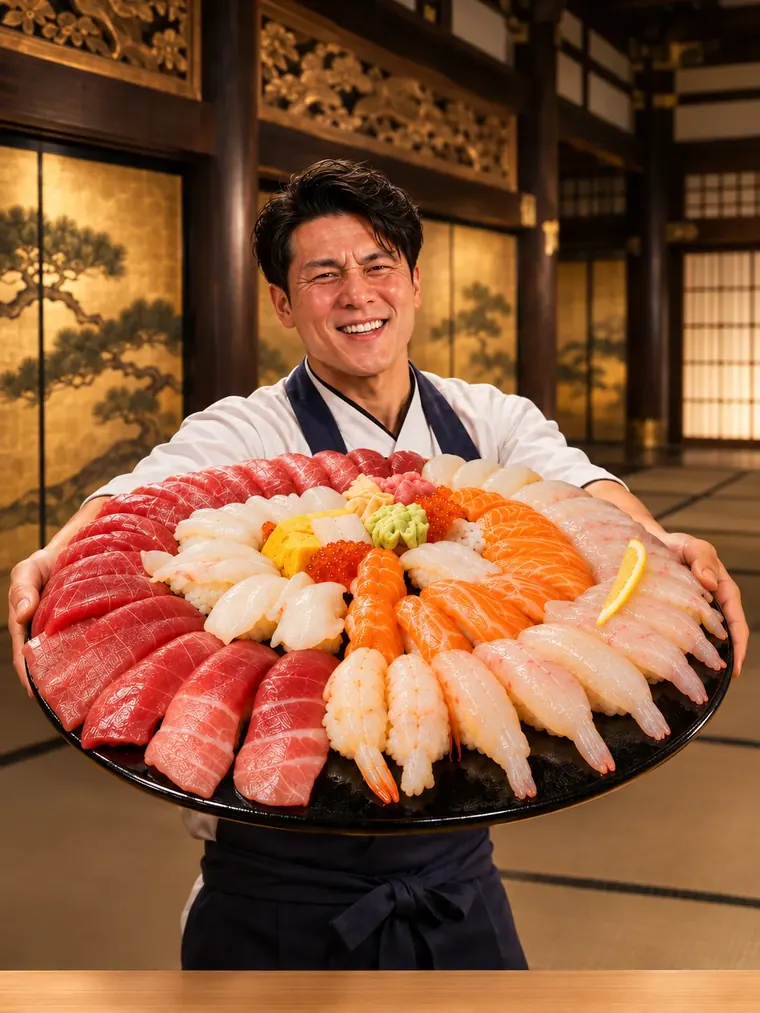
For small groups, pieces come one at a time, counter-style. For large groups, the chef fills platters as they go.
Soup
For 1–9 guests, the 10 pieces come with a soup: ara-jiru or akadashi.
Clean-up
The chef cleans up. From arrival to clean-up is about 1.5 hours.
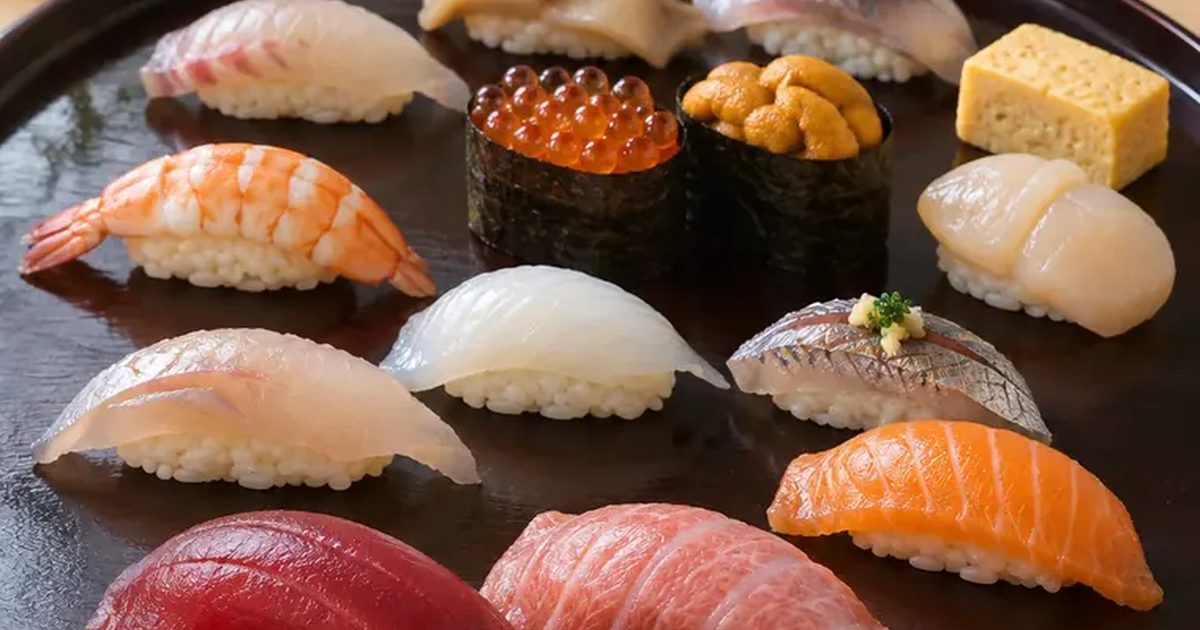
Toppings change with the market. Examples from our menu include lean tuna, medium-fatty tuna, sea bream and shrimp; seared salmon, whelk, sardine or horse mackerel and salmon roe; and the chef's own touches such as toro-taku, seared black cod and unatama. Sea urchin and torigai are options depending on budget. The 10 pieces won't include all of these.
How do you eat sushi at the counter?
There's no exam. The chef wants you to enjoy it. These habits will help you get the best from each piece.
- Eat soon after it's served. Nigiri tastes best right away, while the rice is still loose and at its proper temperature. Photos are fine, just take them quickly.
- Hands or chopsticks. Both are fine for nigiri. Use whatever lets you pick it up without it falling apart.
- Check before adding soy sauce. If the chef has brushed the piece with nikiri soy or added salt or citrus, eat it as it is. Otherwise, turn it slightly and touch the fish side, not the rice, to the soy sauce.
- One bite. Nigiri is sized to be eaten in one bite. If that's hard, two bites is fine. Try not to put a bitten piece back down.
- Pickled ginger (gari) is a palate cleanser. Have a little between pieces, especially when moving from oily fish to lighter fish.
- Talk to the chef. Ask what fish it is, where it's from, or tell the chef what you liked. That conversation is half of the counter experience.
- Say so if something doesn't suit you. If a texture or flavor isn't for you, tell the chef. It's better than leaving it.
If you read Japanese, our blog post on the order to eat sushi goes into more detail.
A sushi chef, at your place in Tokyo
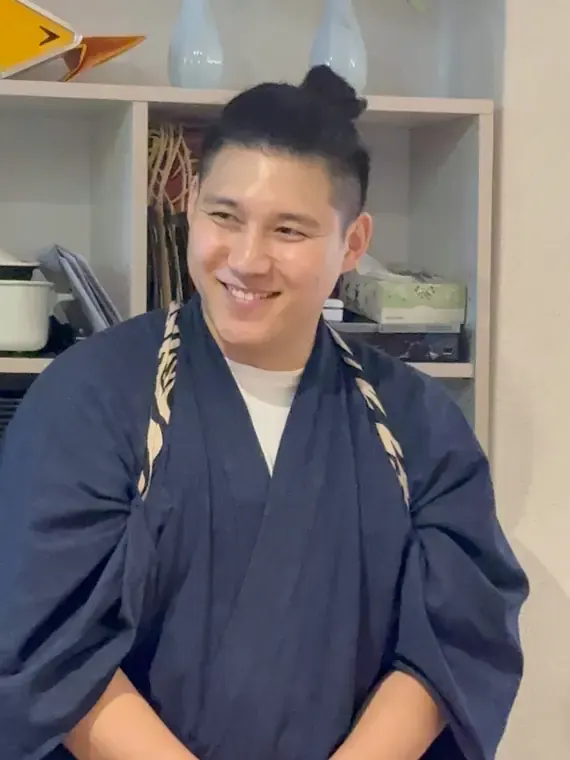
MEGUMI Sushi's chef comes to you and makes sushi in front of you.
- Chef fee ¥22,000 (incl. tax) + ingredients; transport extra
- 1–9 guests: 10 chef's-choice pieces + soup
- 10+ guests: per-chef fee, total by quote
- Please provide a table, running water and drinks. Tokyo 23 wards (ask about other areas)