Types of sushi: the shapes you'll actually find in Japan, and which to try first
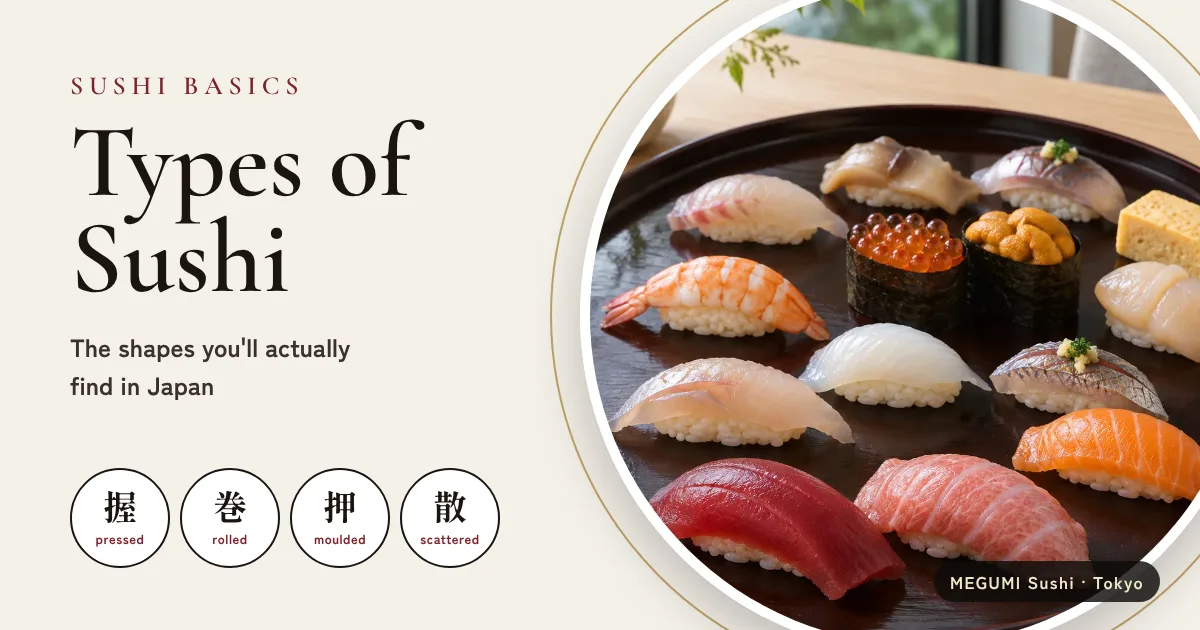
MEGUMI Sushi (東京出張寿司 MEGUMI鮨)
The short answer: sushi types are named by shape, that is, by how the vinegared rice and the topping are put together. In Japan you'll meet four families: pressed by hand (nigiri, gunkan), rolled (hosomaki, futomaki, temaki), pressed in a mould (oshizushi), and scattered or stuffed (chirashi, inari). The fish on top is a separate question. "Tuna nigiri" and "tuna roll" use the same fish but are different types.
One more thing most lists skip: many of the rolls you know from home, such as the California roll, dragon roll or anything with spicy mayo, are styles that grew up outside Japan. They do turn up at some casual chains, but a traditional sushi counter in Tokyo works mostly with the shapes below.
握るPressed by hand
Nigiri握り Gunkan軍艦巻き Temari手まり巻くRolled
Hosomaki細巻き Futomaki太巻き Temaki手巻き Uramakimostly abroad押すPressed in a mould
Oshizushi押し寿司散らす・詰めるScattered or stuffed
Chirashiちらし InariいなりPressed by hand: what are nigiri, gunkan and temari?
This is the family a sushi chef is judged by, because the shape is made in the hand, one piece at a time, in front of you.
- Nigiri 握り
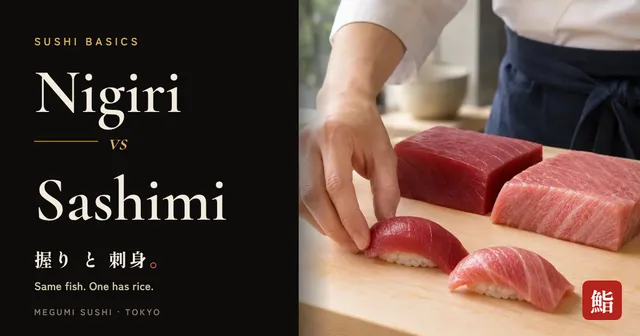
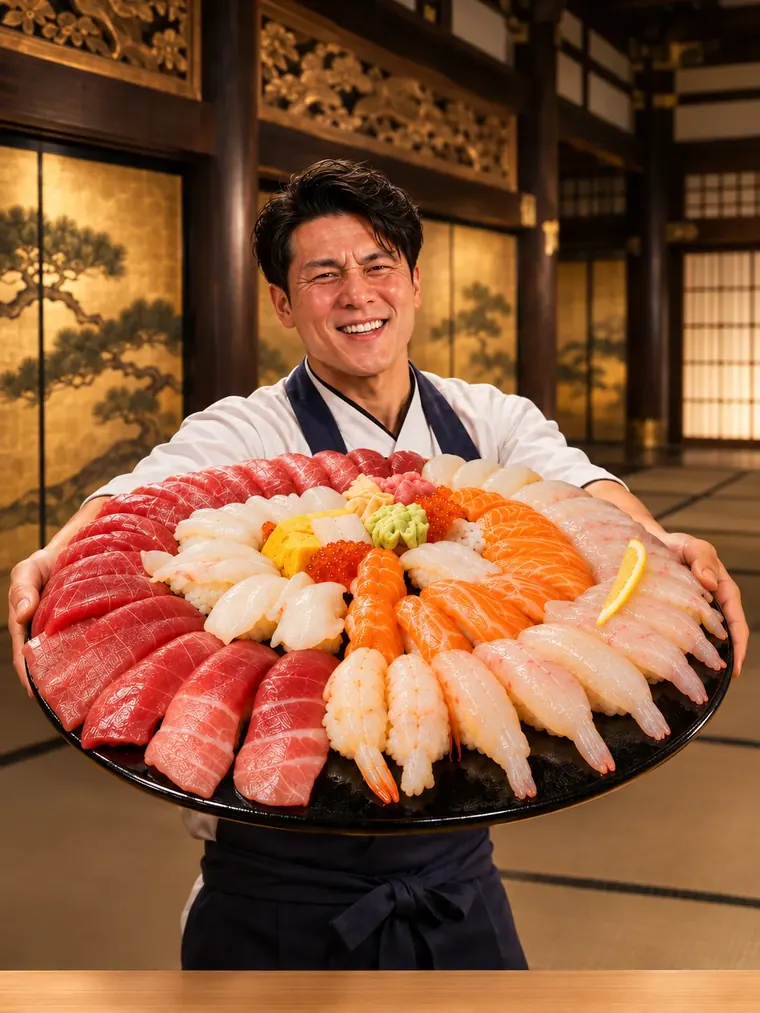
- A slice of topping pressed onto a small oval of rice, often with a little wasabi in between. It's the main event at most sushi counters in Japan, and the style Tokyo is known for. Firm toppings work best: tuna, white fish, shrimp, squid, sweet omelette (tamago). For how it differs from sashimi, see nigiri vs sashimi.
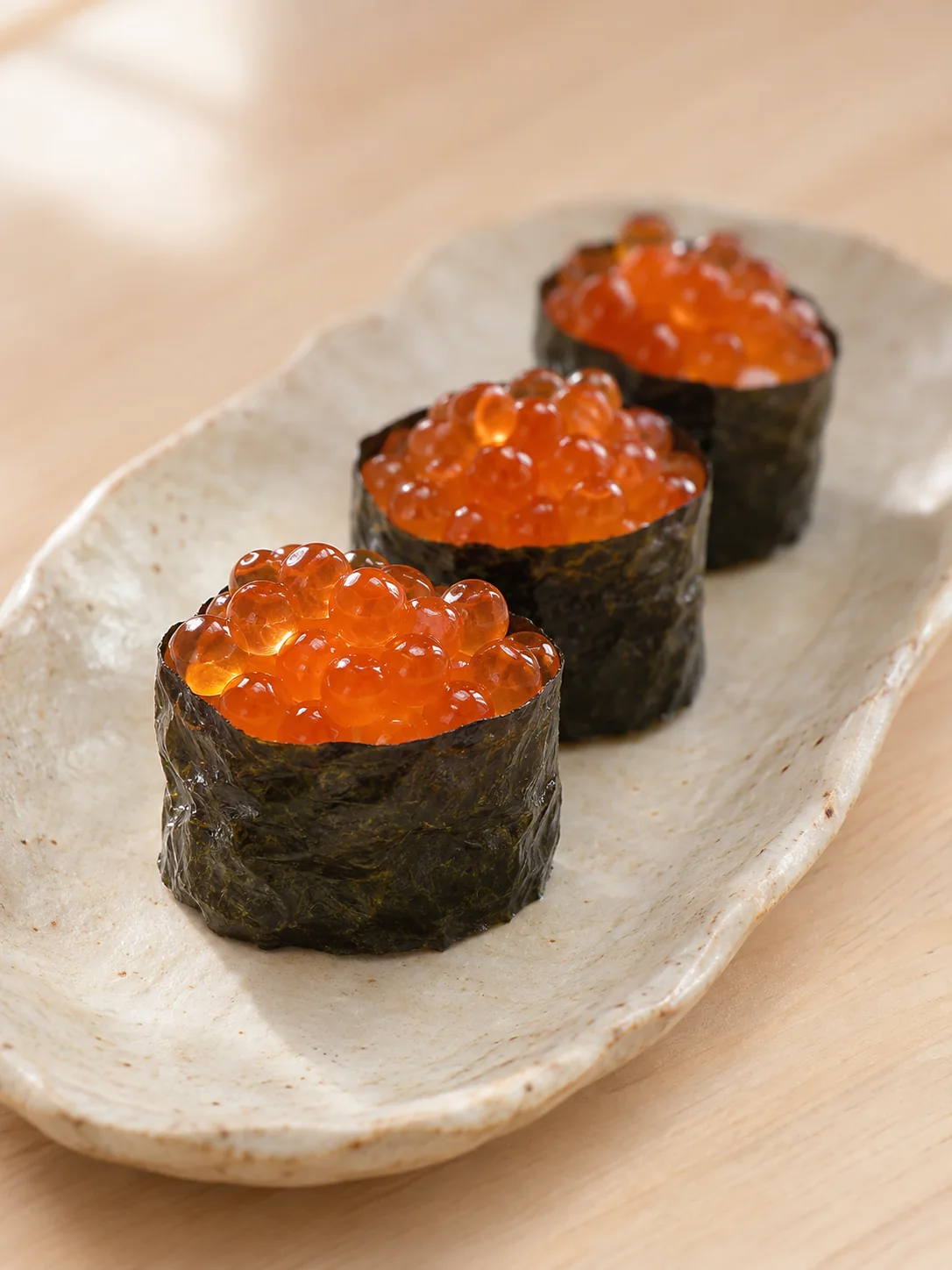
- Gunkan 軍艦巻き
- A wall of nori wrapped around a mound of rice, with a soft topping held on top: salmon roe (ikura), sea urchin (uni), chopped fatty tuna with scallion (negitoro). Anything that would slide off a nigiri goes into a gunkan. Eat it promptly, before the nori softens.
- Temari 手まり寿司
- Small balls of rice with a thin topping, named after a traditional embroidered ball. They're easy to eat and look festive, so you'll see them more at home parties and in gift boxes than at a counter.
Rolled: what's the difference between hosomaki, futomaki and temaki?
All three use nori, rice and a filling. What changes is the thickness and who does the rolling.
- Hosomaki 細巻き · thin roll
- One filling, nori on the outside, cut into six small pieces. The classics are tuna (tekka-maki), cucumber (kappa-maki), simmered gourd (kanpyō-maki), pickled radish (oshinko-maki) and fermented soybeans (nattō-maki). At a counter, many people finish the meal with a thin roll.
- Futomaki 太巻き · thick roll
- A wide roll packed with several colourful fillings, such as omelette, simmered mushrooms, cucumber and sweet fish flakes. It's more common at supermarkets, take-out shops and home than at high-end counters.
- Temaki 手巻き · hand roll
- A sheet of nori rolled into a cone around rice and filling, eaten by hand straight away while the nori is crisp. In Japan it's also the classic home sushi: families set out rice, nori and toppings and everyone rolls their own.
Are sushi rolls Japanese?
Rolled sushi is Japanese; the rolls on many menus abroad mostly aren't. The big difference is the inside-out roll (uramaki), with rice on the outside and nori inside, often topped with sesame seeds, fish roe, avocado or sauces. The California roll is usually traced to North America, and more than one chef has been credited with it, so the details are disputed. Some conveyor-belt chains in Japan now serve rolls like these, but at a traditional counter you'll rarely see them.
Pressed in a mould: what is oshizushi?
Oshizushi is rice and topping pressed into a wooden box, then cut into neat rectangles. It's the old style of western Japan and travels well, which is why you'll see it in department store food halls and as train-station boxed lunches (ekiben). A few well-known regional kinds:
- Battera バッテラOsaka · cured mackerel under a thin sheet of kelp. The name is said to come from a Portuguese word for a small boat.
- Kakinoha-zushi 柿の葉寿司Nara and nearby · mackerel or salmon wrapped in persimmon leaves (the leaf isn't eaten).
- Masu-zushi ます寿司Toyama · trout pressed in a round box lined with bamboo leaves.
- Bōzushi 棒寿司A long bar shape, such as Kyoto's mackerel sabazushi.
Scattered or stuffed: what are chirashi and inari?
- Chirashi ちらし寿司
- Toppings scattered over a bowl or tray of rice. At sushi shops, a lunchtime chirashi is often a bowl of rice covered with slices of raw fish; at home, chirashi is often made with cooked, colourful toppings for celebrations such as the Girls' Day festival (Hinamatsuri) on March 3.
- Inari いなり寿司
- Rice stuffed into a pouch of sweet-savoury fried tofu. No fish needed, cheap, and sold almost everywhere, from supermarkets to convenience stores. It's a good first sushi for children.
Where will you find each type in Japan?
Knowing the shape helps you pick the place. A sushi counter is built around nigiri; a supermarket around boxes that keep well.
| Type | Counter | Conveyor belt | Store / food hall | At home |
|---|---|---|---|---|
| Nigiri | ||||
| Gunkan | ||||
| Thin roll | ||||
| Thick roll | ||||
| Hand roll | ||||
| Chirashi | ||||
| Inari | ||||
| Pressed |
Which type of sushi should you try first?
There's no wrong place to start, but a few combinations make a first night easier.
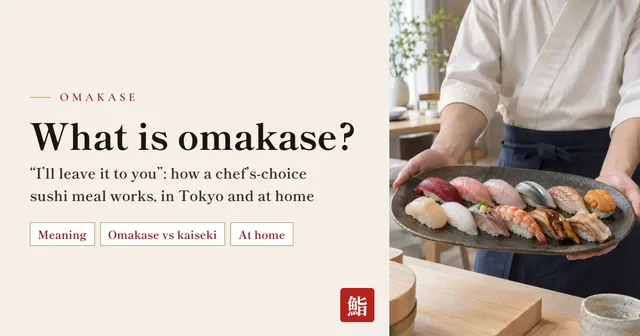
Your first sushi meal in Japan. Go for nigiri, with one or two gunkan for contrast. Start with lighter white fish and work up to richer tuna and eel, then finish with a thin roll. Our guide to omakase explains how a chef's-choice meal is paced.
Not sure about raw fish. Nigiri still works: tamago (sweet omelette), boiled shrimp (ebi), simmered conger eel (anago) and seared toppings are all cooked. Inari and futomaki usually have no raw fish at all.
Vegetarian. Look for kappa-maki (cucumber), oshinko-maki (pickled radish), nattō-maki and inari. One catch: inari pouches, kanpyō and tamago are often seasoned with dashi, a stock that commonly contains fish, so ask before you order.
With children. Inari, tamago, thin rolls and wasabi-nuki (no wasabi) nigiri are easy wins. Many places in Japan add wasabi by default, so say it when you order.
On a train or a picnic. Pick pressed sushi or inari. They're made to hold their shape and travel, which nigiri and gunkan are not.
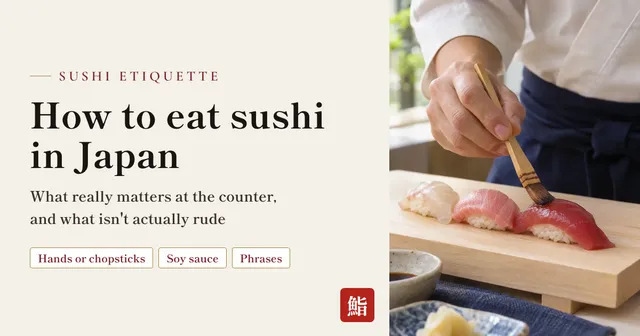
Allergies and raw fish: if you have a food allergy, are pregnant, or have any health concern about raw seafood, check with your doctor before the trip and tell the restaurant or chef in advance. For table manners, see sushi etiquette in Japan.
Hand-pressed sushi, made at your table in Tokyo
Of all the types, nigiri is the one that changes most in the minutes after it's made, which is why people line up for counter seats. MEGUMI Sushi offers another way: our chef comes to your home, rental apartment or office in Tokyo's 23 wards and makes sushi one piece at a time at your table. The menu is built around nigiri; rolls and pressed sushi, such as pressed conger eel, can be discussed for your group and budget.
- What each guest gets: 10 chef's-choice pieces plus ara-jiru (fish-bone soup) or akadashi (red miso soup). Toppings change with the market; examples are on our English page and the menu page (Japanese).
- Price for visitors from overseas: $100 per guest, all included (chef's visit, ingredients and transport within the 23 wards), paid in cash in Japanese yen on the day. Details are on the price page (Japanese).
- Time: about 1.5 hours from arrival to clean-up. You provide a table, running water and drinks such as tea.
- Dietary needs: tell us before booking, and we'll tell you whether we can adjust.
To ask, send the date, number of guests and area on LINE; asking doesn't confirm a booking. You can also pick a slot on the booking calendar (Japanese) and write "Overseas guest" in the ご要望 (requests) box. The Japanese details are on our 東京の出張寿司 page.
Nigiri made in front of you, in Tokyo
MEGUMI Sushi's chef comes to your place and makes each piece at your table.
- $100 per guest, all included
- Each guest: 10 chef's-choice pieces + soup
- From 1 guest, Tokyo 23 wards
- Pay in cash, in Japanese yen, on the day