What is omakase? What it means, how an omakase meal works in Tokyo, and how to have one at home
MEGUMI Sushi (東京出張寿司 MEGUMI鮨)
Key points
- Omakase (おまかせ) means "I'll leave it to you." The chef decides what you eat, and in what order, based on the day's fish.
- It is a way of ordering, not a dish. Sushi is the best-known example, but you'll also hear it for other cuisines.
- It differs from okimari (a fixed set), okonomi (ordering piece by piece) and kaiseki (a formal multi-course meal).
- Your one job: tell the chef what you can't eat before the meal starts, ideally when you book.
- You don't need a famous counter. In Tokyo, a sushi chef can also come to your home, rental or office and serve a chef's-choice meal at your table.
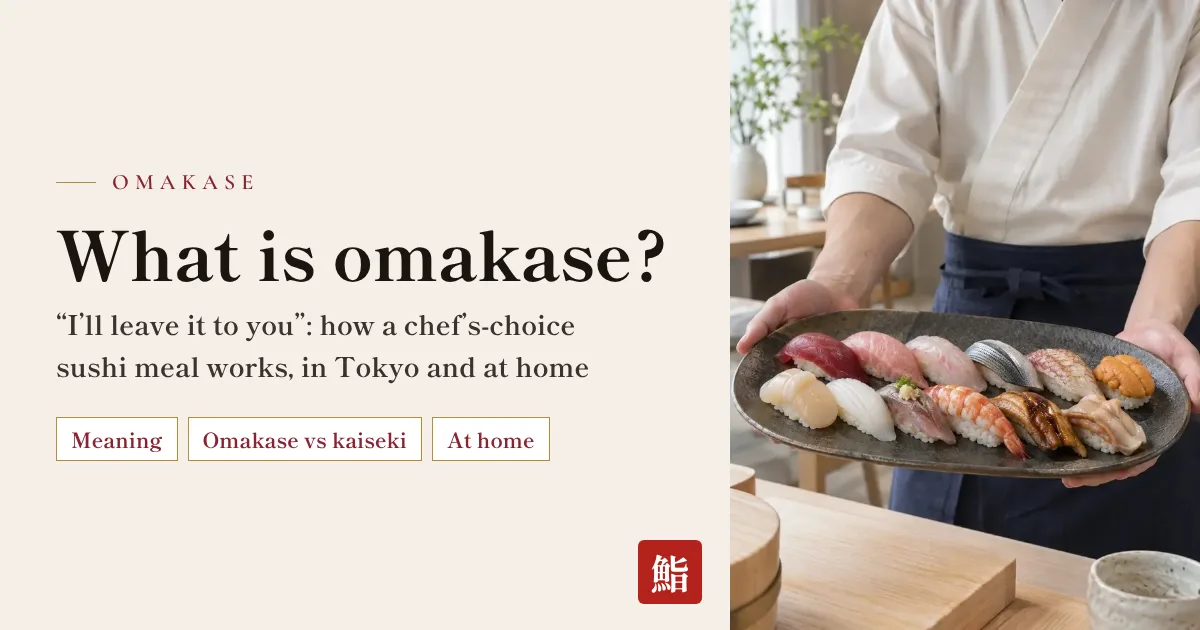
The short answer: omakase is a Japanese way of eating where you hand the decisions to the chef. At a sushi counter, that means the chef chooses each piece from what came in that day, makes it in front of you and serves it the moment it's ready. You don't read a menu. You eat what arrives, one piece at a time.
This guide is for travelers and business visitors who keep seeing "omakase" on Tokyo restaurant lists and want to know what they're signing up for: what the word means, how it compares with other Japanese meal styles, how the meal runs, how pricing and booking usually work, and what to say. It ends with a different option: having the chef come to you, which is what we do at 東京の出張寿司 MEGUMI鮨 (MEGUMI Sushi, a private sushi chef service in Tokyo).
What does omakase mean?
Omakase (おまかせ, said oh-mah-kah-seh) comes from the Japanese verb makaseru, "to entrust" or "to leave something to someone." The polite prefix o- turns it into a phrase you can use with anyone: "I'll leave it to you."
It's an everyday word in Japan, not a restaurant term. You can say "omakase" to a hairdresser or a florist. At a sushi counter, it has a clear meaning: you trust the chef to choose the fish, the seasoning and the order.
- The chef chooses from the day's fish. What's in season and what looked best at the market shapes the meal, so two visits can be quite different.
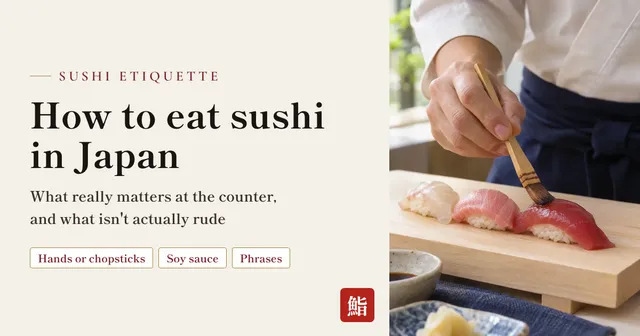
- Each piece is seasoned for you. The chef often brushes on nikiri (a thin soy glaze) or adds salt or citrus, so many pieces don't need soy sauce at all.
- It's paced by the chef. Pieces arrive one at a time, timed so each is eaten fresh.
In English-speaking countries, "omakase" is sometimes used loosely for any tasting menu. In Japan, it simply describes how you order.
How is omakase different from okimari, okonomi and kaiseki?
These four words come up a lot on Japanese menus and in reviews. Knowing them makes menus and booking pages much easier to read.
Omakase (おまかせ)
- What it is
- Chef's choice. The chef decides the pieces and order on the day.
- Good for
- Tasting what the chef thinks is best right now, without having to know fish names.
Okimari (お決まり)
- What it is
- A fixed set. The pieces are decided in advance and listed, usually at a set price. Common at lunch and at more casual shops.
- Good for
- Knowing exactly what you'll get and what it costs.
Okonomi (お好み)
- What it is
- "As you like." You order piece by piece from what's available.
- Good for
- Regulars and people who know what they love. Prices may not be shown.
Kaiseki (懐石・会席)
- What it is
- A formal multi-course Japanese meal with many small seasonal dishes in a set structure. It's a cuisine style, not a way of ordering sushi.
- Good for
- A full Japanese dinner with soups, grilled and simmered dishes. Sushi may appear, but it isn't the focus.
Many sushi counters mix these. A common pattern is an omakase course followed by the chance to order a few extra pieces okonomi-style if you're still hungry.
How does a sushi omakase meal usually go?
Every chef has their own style, so treat this as a typical shape rather than a rule.
- 1
Everyone sits down at the start time.
At small counters, all guests often start together. Arriving late can mean missing pieces.
- 2
Some counters begin with small dishes.
You may get sashimi or small cooked plates (often called tsumami, "something to pick at") before the nigiri. Others go straight to sushi.
- 3
Nigiri arrives one piece at a time.
The chef places each piece in front of you. Many chefs move from lighter fish, like white fish, toward richer pieces such as fatty tuna, salmon roe or sea urchin.
- 4
The meal closes with a roll, egg or soup.
A roll, a slice of tamago (sweet omelet) and a bowl of soup are common finishes.
- 5
You may be asked if you'd like more.
If extras are offered, ask whether they cost extra before ordering.
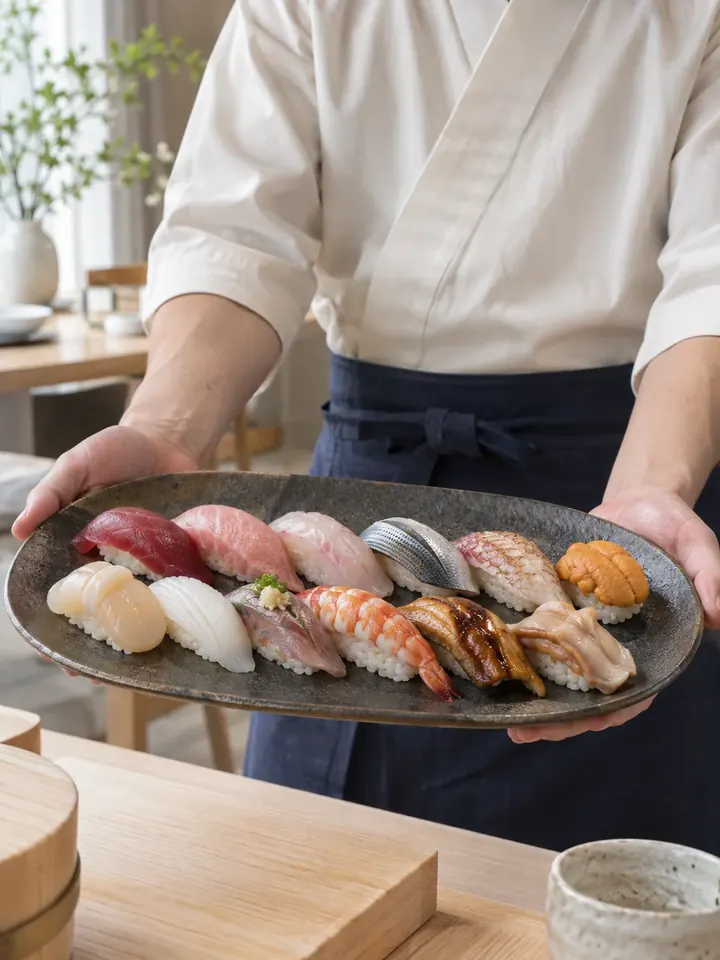
The one thing that really matters during the meal: eat each piece soon after it's served. For the details of eating nigiri (hands or chopsticks, soy sauce, wasabi), see our guide to sushi etiquette in Japan.
How is omakase priced?
Omakase is usually sold as a course with a price per person. Prices vary a lot between counters, so check the restaurant's own page rather than relying on lists. When you compare, look at what the price covers:
- Course price: is it per person, and does it include tax?
- Drinks: usually separate. Sake and other drinks can add a lot to the bill.
- Service charge: some restaurants add one. It will be on the bill or the booking page.
- Extras: extra pieces or premium items may cost more. It's fine to ask before you order.
- Cancellation: popular counters often charge for late cancellations or no-shows, sometimes the full course price.
Tipping isn't a general custom in Japan. You pay the bill, and a "gochisōsama deshita" (thank you for the meal) on your way out is the usual thanks.
How do you book an omakase counter in Tokyo?
Well-known counters have very few seats, so booking ahead is normal. The usual routes:
The restaurant's own page or phone
Many take bookings directly. Some only accept Japanese phone calls.
Booking platforms
Some counters list seats on reservation sites, often with a card guarantee and a cancellation policy.
Your hotel's concierge
Helpful when a restaurant only takes Japanese calls. Ask early.
Before you confirm, check the start time, the cancellation terms, whether children are accepted, and whether they can handle your dietary needs. A counter seat means sitting close to strangers and the chef for the whole meal, which is part of the appeal and also why rules are stricter than at casual restaurants.
What should you tell the chef before omakase?
Because the chef plans the meal, the most helpful thing you can do is say what you can't eat early, ideally when you book, not when the first piece arrives.
- Allergies: name the food clearly, for example shellfish, shrimp or fish roe. A chef can only tell you whether they can adjust once they know.
- Foods you don't eat: raw fish, a particular fish, or anything you avoid for religious, vegetarian or other reasons.
- Wasabi: if you don't want it, say so before the pieces are made.
- Appetite: if you eat less, ask for less rice. If you're hungry, ask whether extras are available.
- Children: tell the restaurant their ages when booking.
Every chef decides what they can and cannot adjust. If something is important, get a clear answer before the day.
Which Japanese phrases help during omakase?
Omakase de onegaishimasu
- Meaning
- "Omakase, please." Use it when ordering if the counter offers more than one style.
◯◯ ga taberaremasen
- Meaning
- "I can't eat ◯◯." For example kai (shellfish), ebi (shrimp), namazakana (raw fish). Add arerugī desu ("it's an allergy") if that's the reason.
Shari sukuname de onegaishimasu
- Meaning
- "Less rice, please." Handy if you want to finish the whole course comfortably.
Kore wa nan desu ka?
- Meaning
- "What is this?" Chefs are usually happy to tell you the fish.
Kore, mō ikkan onegaishimasu
- Meaning
- "One more of this, please." Ask whether extras cost more first.
Onaka ippai desu
- Meaning
- "I'm full." A polite way to say you're done.
Is omakase worth it?
It depends on what you want from the meal.
It suits you if…
- You want to taste fish you wouldn't know to order, like watching the chef work, and are happy to let someone else decide.
It may not suit you if…
- You have many foods you avoid, prefer to know the exact menu and price, are traveling with young children, or want a relaxed, noisy dinner with friends.
If the last row sounds like your group, you don't have to give up on chef's-choice sushi. You can change the setting.
Can you have omakase at home in Tokyo?
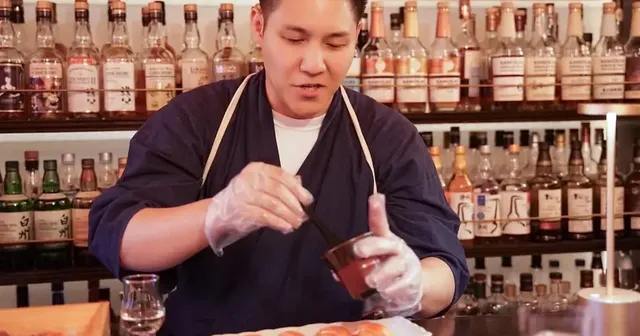
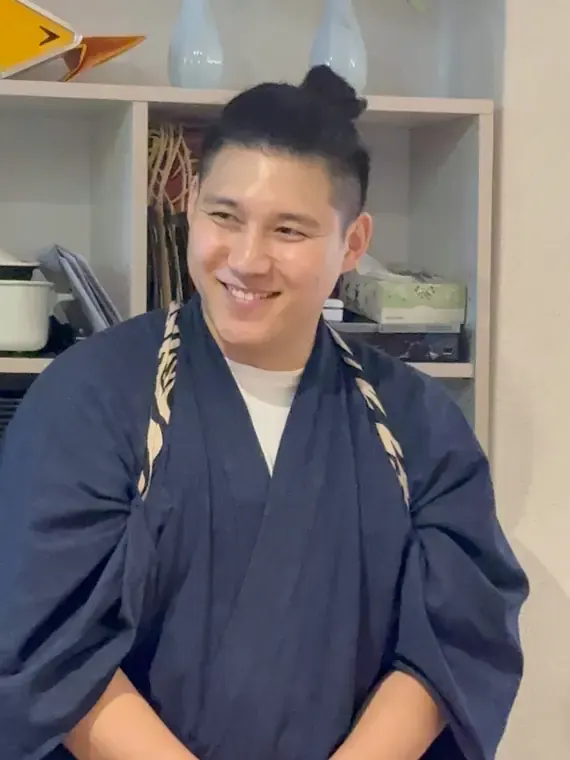
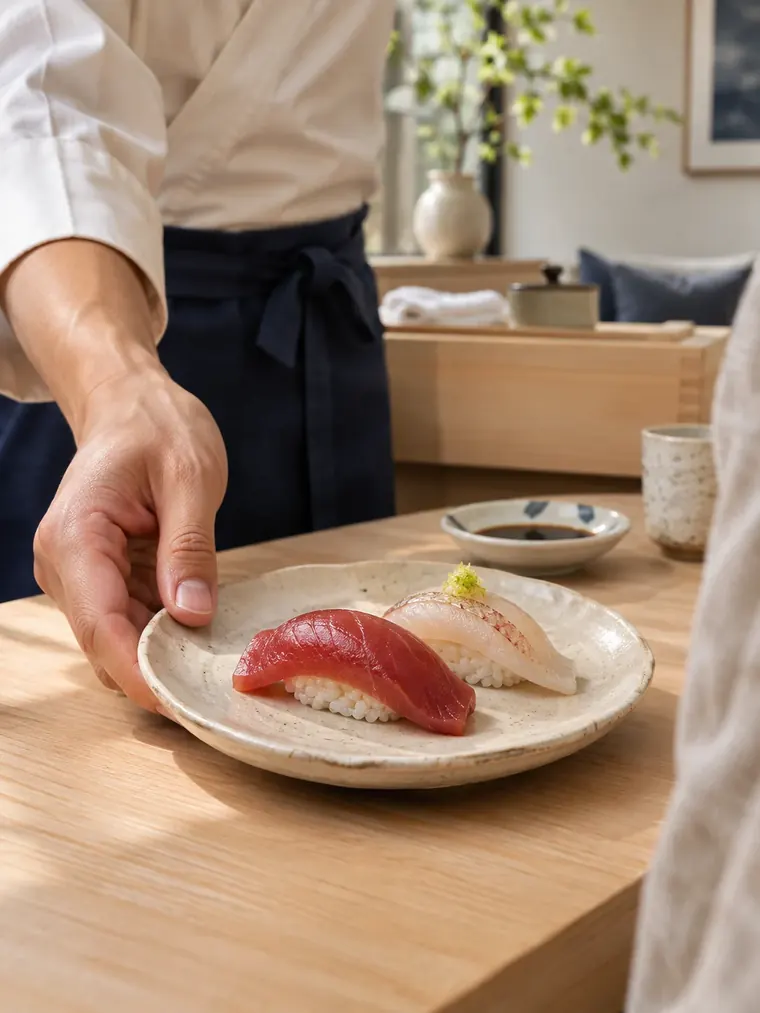
Yes. With a private sushi chef, the chef comes to your home, rental apartment, office or party venue and makes sushi at your table. With MEGUMI Sushi, each guest gets 10 chef's-choice pieces and a soup, so the idea is the same as omakase: the chef picks from the day's fish and hands you each piece fresh.
How it compares with a restaurant counter:
Where
- Counter
- The restaurant, at a fixed start time
- At home
- Your home, rental, office or venue in Tokyo's 23 wards (other areas: ask)
Who's there
- Counter
- Your party plus other guests
- At home
- Only your group, from 1 guest
How it's served
- Counter
- One piece at a time
- At home
- Small groups one piece at a time; larger groups get platters filled as the chef works
What you get
- Counter
- Depends on the restaurant
- At home
- 10 chef's-choice pieces + ara-jiru (fish-bone soup) or akadashi (red miso soup) per guest
Price for visitors
- Counter
- Depends on the restaurant; drinks usually extra
- At home
- $100 per guest, all included (chef, ingredients, transport within the 23 wards), paid in cash in Japanese yen on the day
Time
- At home
- About 1.5 hours from arrival to clean-up. The chef cleans up.
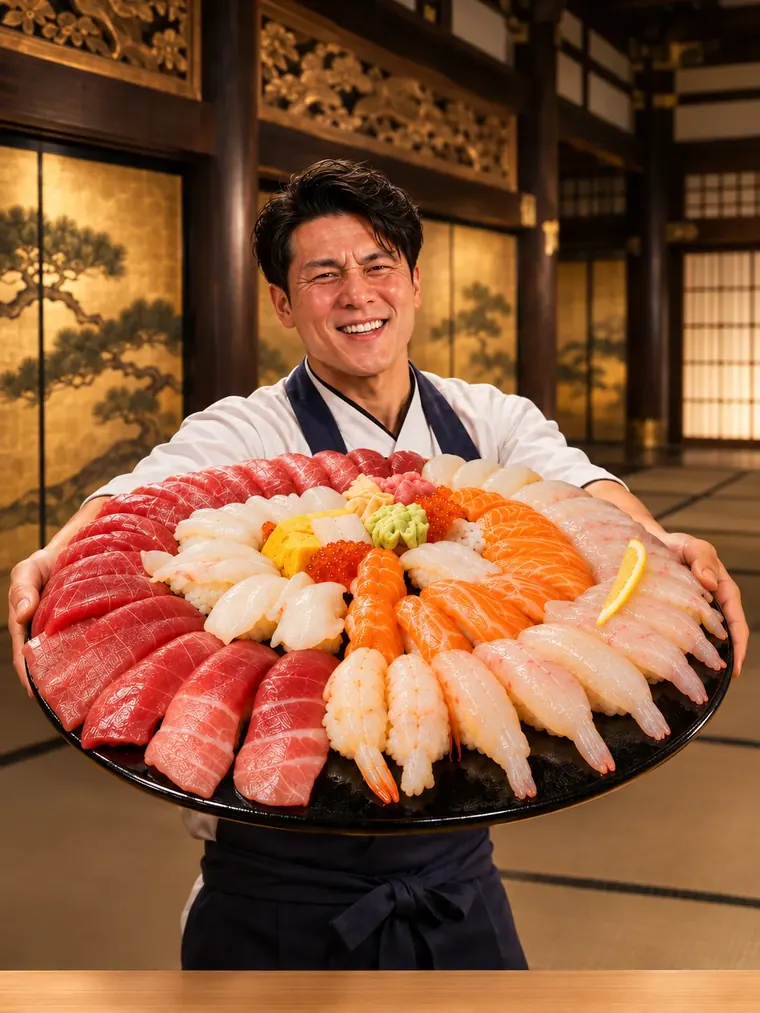
What might be on the plate: toppings change with the market and your budget. Examples from our menu include lean tuna (akami), medium-fatty tuna (chutoro), sea bream, shrimp, seared salmon, whelk, sardine or horse mackerel, salmon roe (ikura), and the chef's own touches such as toro-taku, seared black cod and unatama. Torigai (cockle) and sea urchin (uni) are options depending on budget. Ten pieces for a small group won't include everything on this list. Extra nigiri and some drinks can be arranged for an additional charge.
What you set out: a table, running water, and drinks such as tea. The chef brings chopsticks, small and serving plates, soy sauce, wasabi and gari (pickled ginger). If you're staying in a hotel, a rented venue, or using a shared room in an apartment building, please check with the manager that an outside chef may prepare and serve food there.
Dietary needs: tell us about allergies, foods someone doesn't eat, or vegan, vegetarian or religious diets before booking. We'll check the details and tell you whether we can adjust.
How do you ask MEGUMI Sushi?
- To ask first: add our official LINE account and send the date, number of guests, area and occasion. Asking does not confirm a booking.
- To book now: pick an open slot on the booking calendar (Japanese). Submitting confirms the booking. Please write "Overseas guest" in the ご要望 (requests) box.
- Start times: weekdays from 19:30 to 21:30, and weekends and holidays from 12:00 to 19:00.
- Language: the booking pages and LINE are in Japanese. If you'd prefer English, say so in your first message and ask about language support for the day.
Example message: "Hello. We are 3 people visiting Tokyo. Could you come to our apartment in Minato-ku on [date] around 19:30 for an omakase-style sushi dinner? One of us can't eat shrimp."
For more on planning from abroad, read how to have a sushi chef come to your home, rental or office in Tokyo. Prices and booking are on the MEGUMI Sushi English page, and the original Japanese details are on our 東京の出張寿司 page.
Omakase at your table in Tokyo
MEGUMI Sushi's chef comes to you and makes sushi in front of you.
- $100 per guest, all included (chef, ingredients and transport)
- Each guest: 10 chef's-choice pieces + soup
- Pay in cash, in Japanese yen, on the day
- Please provide a table, running water and drinks. Tokyo 23 wards (ask about other areas)